Category Archives: Short Essays

Freedom and Fear: India and Pakistan at 70

IMG_1949
© 2014 Pippa Virdee

In the midst of the monsoon of August 1947, British India ceased to be and gave way to two independent nations. The logic of this Partition being religious and regional, the older and larger India was reinforced as a Hindu majoritarian society, while the newer and smaller Pakistan emerged as an Islamic country. No Partitions are total and absolute but this one was especially terrible and ambiguous and left a little less-or-more than 20% religious minority population on both sides. Moreover, it created two wings of Pakistan with a hostile Indian body-politic in the midst.

This event was not entirely of sub-continental making. The British Empire in Asia had begun to crack at the hands of the Japanese army during World War Two, most spectacularly with the fall of Singapore in February 1942, and crumbled in South Asia afterwards. Along with India and Pakistan, the-then Burma and Ceylon (both 1948) too emerged independent at this time. All this was to bring about many changes, both internally in India and internationally. Europe, the ravaged battlefield of the World Wars, ceased to be the centre of the Western world, with political and economic power shifting decisively to the former Soviet Union and the United States, representing two contrasting and conflicting ideological visions for the post-1945 world.

The end of the British rule in South Asia happened alongside the emergence of this conflict, christened the Cold War. The road to freedom and partition of India and creation of Pakistan was a long one and accompanied with fundamental social, economic and political changes. From the mutiny of 1857 from Calcutta to Delhi to the massacre of 1919 in Jallianwala Bagh, Amritsar, from the formation of the Indian National Congress in 1885 to the establishment of the All-India Muslim League in 1906, from fighting for King and country in two World Wars to seeking self-rule in the inter-war years, and, from the development of an elaborate civil and military bureaucratic and infrastructural apparatus and a space for provincial politics, all these were to completely transform Indian society.

Read the complete article via: http://magazine.thediplomat.com/#/issues/-Kq0QJtC_OQiU3Dy0tQ6 

No Man’s land: the Wagah-Attari Border

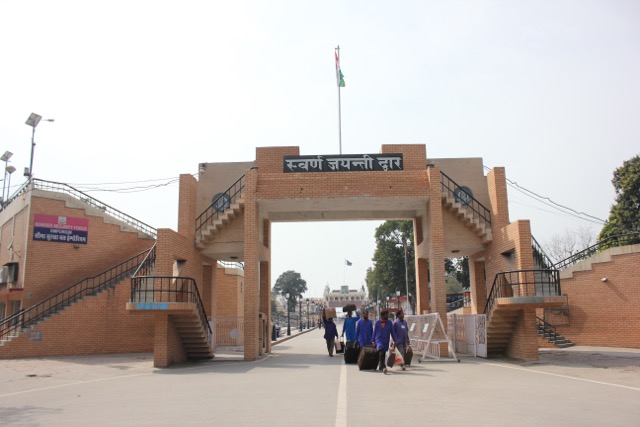
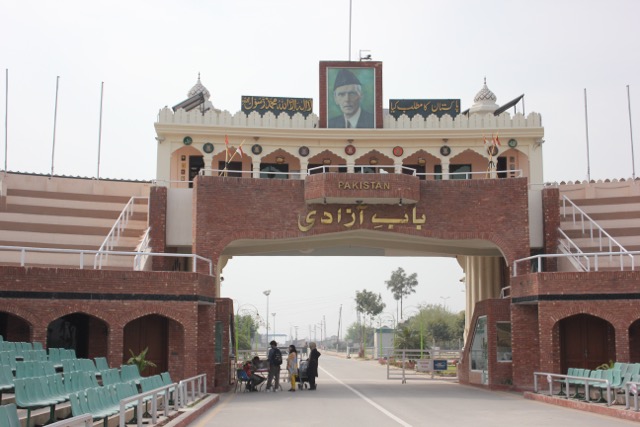
Located at a short distance of 24 kilometers from Lahore, Wagah is a small village in Pakistan and placed strategically on the Grand Trunk Road and serves as the main goods and railway station between India and Pakistan. The Indian counterpart is Attari and both serve as the only official land border crossing between India and Pakistan. The Radcliffe Line that divides them was the scene of both immense horror and gratitude for those fleeing to the “promised lands” in August 1947. Poignantly for writers such as Sadat Hasan Manto, many migrants were torn between the two spaces of no man’s land. This legacy continues today for those divided by this border.

The Wagah-Attari border is more accessible to foreigners who cross the border rather than the citizens of India and Pakistan. Having used this route numerous times, it brings up all sorts of surprises every time. There is always a sense of uncertainty about the political climate between the two countries, which can change at short notice. When relations are good between them, the border seems a little more open and less hostile, there is generally more traffic of people, especially people with green and blue passports. Otherwise, there are hardly that many people using the border only the diplomats, foreigners and the select few. I am one of the privileged few. The Pakistani’s always ask me if I’ve enjoyed my stay and have I faced any problems? I always reassure them that I’ve had a wonderful time. The Indians it has to be said are less talkative, though on occasions I have been “treated” to cups of chai.

There is usually plenty of dramatic material for the writers, artists, and peaceniks etc that want to spend time here for inspiration. There is sadness as people (de)part, despair as people fail to crossover due to lack of proper paperwork, there are covert (or not so covert) spies keeping an eye on passengers, and then there are security/customs people who are keen to show their power and within the ordinary, there are the money changers and inquisitive coolies working hard, often in the full sun. But there are always people wondering about the “other”.

When I first crossed this border, over fifteen years ago, the border was a basic set-up in old colonial bungalows. You could literally walk across from one side to the other. Today, both have made this border into an airport style, elaborate process with scanners and plenty of formalities and paperwork. Previously the coolies were employed to help carry people’s luggage to the international boundary that divides the two countries and they would also exchange goods that were permissible under trade agreements; the two carried on side by side. Now trade is exchanged more formally via the goods and transit terminal and the coolies make their livelihoods through the meagre travellers passing through. Most of the coolies belong to Wagah and Attari and come from a generation of families who have lived and worked in this border area. It is unlike any other place in India or Pakistan. They have seen many changes and have many tales to share, often from divided migrant families themselves.

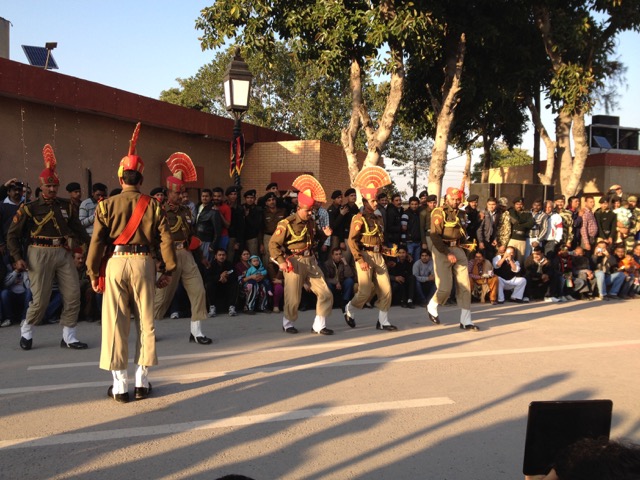
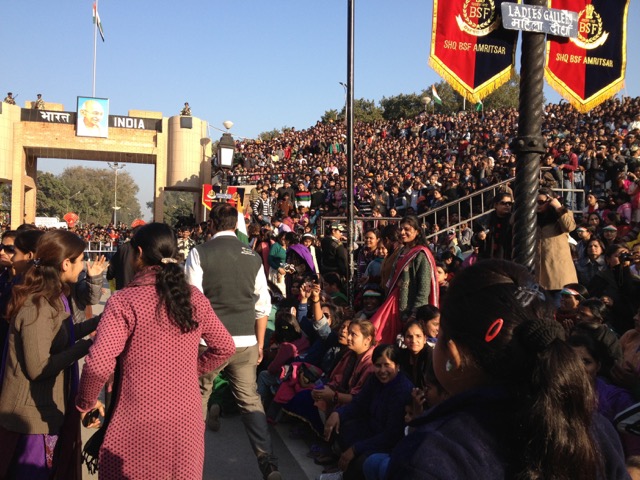
The Indian Border Security Force and the Pakistani Rangers have their daily ritual of lowering of the flag ceremony at the end of the day before sunset. Immaculately dressed, in Indian khaki and Pakistani Black, the soldiers walk and strut in their fast paced and intimidating style. Michael Palin, during his travels around the world, compared this to the Ministry of Silly Walks from the Monty Python sketches; this is not too far-fetched. Often referred to as the strut of the peacocks, this is a show of prowess, power, and pride of the most superficial nature. Hundreds of Indians and Pakistanis flock to see this spectacle of jingoistic and patriotic display. Few would wonder about how this well choreographed ceremony actually happens. It is in many ways an obscene drama that takes time to practice and perfect, and requires the two forces to work together. They do this away from the public gaze, so as to not taint the public image. This tradition started back in the 1950s has evolved now to only provoke the nationalist desire to fuel this antagonistic relationship between the two countries. It has continued to grow, attracting foreign as well as local tourists and the seating arrangements at the border are yet again being upgraded and expanded to accommodate the demand. Large crowds chant “Pakistan Zindabad!” or “Jai Hind!” to show their patriotism, waving their flags with unwavering allegiance to the idea of India and Pakistan. It is now nearly seventy years when the Radcliffe Line was drawn, and if anything, it seems this border has become even harder than previously.

Some useful links:

Peacock at Sunset by Frank Jacobs: https://opinionator.blogs.nytimes.com/2012/07/03/peacocks-at-sunset/

The Wagah border ceremony in India: https://adventuresofagoodman.com/wagha-india-pakistan-border-history/

23 Sir Ganga Ram Mansion: The house of Amrita Sher-Gil

No 23 Sir Ganga Ram

A few years back I had the pleasure of wondering around and exploring the old city remnants of Lahore, accompanied by Najum Latif, a migrant of 1947 and resident of the Androon Shehr. We start off where he lives, Sir Ganga Ram Mansion located just behind The Mall and a hidden gem of the who’s who in the history of Lahore’s former life. In its heyday of the 1930s, Lahore was a cultural centre for North India and writers such as Khushwant Singh and the artist like Abdur Rahman Chughtai (and a friend of Amrita Sher-Gil’s father) lived nearby. Only a few doors away from Latif’s house was where Amrita Sher-Gil rented an apartment with her husband, Dr Victor Egan. When Latif was growing up he was a frequent visitor to No 23, at the time he was unaware that Sher-Gil, the great Punjabi-Hungarian painter once lived there.

Sher-Gil was born in 1913 in Budapest, her father was the aristocratic landlord Sardar Umrao Singh Majitha and her mother a Hungarian opera singer. Educated in Paris, she took to the bohemian lifestyle of the Parisian art scene that allowed her to express herself truly. European in style, yet her paintings also reflect the multiple layers and textures of her own life and identity. Influenced by the work of Paul Cezanne, Amedeo Modigliani and Paul Gaugain, she later looked to India for inspiration, trying to fuse these two together. After spending four years in Paris, Amrita decided to return to India. She noted that, “My professor had often said that, judging by the richness of my colouring, I was not really in my element in the grey studios of the West, that my artistic personality would find its true atmosphere in the colour and light of the East” (Rizvi). During her time in India, she painted scenes from India, learning new techniques and getting inspiration from the breath of the sub-continent. Today she is considered one of the most important Indian painters of the 20th Century and certainly one of the most expensive female painters in India.

She was only 28 when died at 23 Sir Ganga Ram Mansion apartments, where she spent the last few months of her life. Her husband had a clinic on the ground floor and she painted upstairs, where they also lived. She first came to Lahore in 1937 from Paris when her work was exhibited at the famous Faletti’s Hotel. It was a resounding success and challenged the status quo of the art world. In September 1941 she came to Lahore so that she could plan for her solo exhibition in December; this never happened as she was suddenly taken ill and died in a matter of days. The planned discussion between Abdur Rahman Chugtai and Amrita Sher-Gil never happened and instead the exhibition opened but posthumously. Most of these works are now located in the National Gallery of Modern Art in New Delhi.

Amrita Sher-Gil still remains an enigma in death, as she was in life. The young artist was never to see the great legacy that she would leave behind and sadly few Lahoris would be aware that she once lived and worked in the great historic city. Her painting, Vina Player, still finds space in Lahore Museum but otherwise sadly her association with Lahore has all but evaporated. She was cremated on banks of the Ravi in Lahore on December 7, 1941, a river that now forms a natural boundary between India and Pakistan.

Other articles to read more about Amrita Sher-Gil:

Yours, Amrita by Dua Abbas Rizvi. http://www.thefridaytimes.com/beta3/tft/article.php?issue=20130726&page=16

Amritsar sisters posed for painter Amrita’s ‘Three Girls’ by Nirupana Dutt. http://www.hindustantimes.com/punjab/amritsar-sisters-posed-for-painter-amrita-s-three-girls/story-WsZhRAtCcX5BTMxicxcdBO.html

Chughtai’s Art Blog, http://blog.chughtaimuseum.com/?p=978

Finding Amrita in Lahore by Dalmia. http://indianexpress.com/article/opinion/columns/finding-amrita-in-lahore/

Great success in a short life. http://budapesttimes.hu/2016/01/23/great-success-in-a-short-life/

The Curious Case of Multani Mitti and the Taj Mahal

This slideshow requires JavaScript.

In 2001 Pakistan’s president General Pervez Musharraf came to Agra to hold a historic summit between India and Pakistan, with the aim of resolving some of the long-term fractious issues between the two nations. It has now been nearly 16 years since the two countries came close to finally resolving their enmity. As the talks collapsed it paved the way for the lost opportunities that both nations now lament at leisure. At the back of the Agra Summit, Musharraf also made a trip the Taj Mahal. In preparation for this trip the Taj Mahal got a face-lift, literally. Multani Mitti (mud from Multan, Pakistan where this lime-rich clay was originally found) was used to cleanse the Taj Mahal which was suffering from years of exposure to pollution and general wear and tear. Although it is less clear whether the Multani Mitti actually came from Multan. The Multani Mitti, which is effectively mud therapy and has been used for centuries as a beauty product, cleansed away the pollutants that gave the Taj Mahal more of a yellowish (dirty) appearance and now it gleams bright and white. In a recent visit to the Taj Mahal, the process of cleaning the historic site continues, slowly and painstakingly. Despite the hundreds of daily visitors looking for the perfect picture at the Taj Mahal, they have to suffice with the scaffolding.

For me a visit to Agra is incomplete without also paying homage to Fatehpur Sikri, the city founded in 1569 by the Mughal Emperor Akbar, which also served as the capital of the great empire from 1571-1585. Akbar choose the site to honour the Sufi Saint Salim Chishti (his shrine overlooks the capital city complex) and took great care in the vision and architecture of the capital, sadly once finished the complex was difficult to sustain due to the shortage of water into the city. One of the most architecturally rich pieces in the Diwan-i-Khas, hall of private audience, is the octagonal pillar, encompassing the secular, open and embracing vision that Akbar had for the new capital. The pillar brings together different architectural designs (see picture) highlighting his own interest in inter-faith dialogue. And it is here that Akbar apparently held his many theological discussions.

What was apparent in visiting the Taj Mahal and Fatehpur Sikri in the same day was the way both sites are treated, the Taj Mahal is by far the superior site. It attracts hundreds of visitors and foreigners (and Indians if they fail to bring ID with them) pay a generous entry fee and it is a site which is promoted by the UP government extensively. Where would ‘Incredible India’ be without the presence of the Mughal built Taj Mahal. Yet for me the deserted city of Akbar is equally, if not more, significant. It is more spread out and beams with the beautifully craved red stone architecture with geometric patterns, and the extraordinary Tomb of Sheikh Salim Chisti who was a descendant of Khwaja Moinuddin Chishti of Ajmer. The Sufi Saint foretold the birth of Akbar’s son, who is named after him, Prince Salim (later Emperor Jahangir).

What connects the Multani Mitti and Agra is the myopic and selective amnesia that ‘Incredible India’ has towards its Mughal/Muslim heritage. Fatehpur Sikri is visibly less attractive as a tourist destination and visibly more ‘Muslim’ as a lived city and the Taj Mahal in its glorious white marble beauty is entirely a commercial complex and less of a tomb to Emperor Shah Jahan’s favorite wife, Mumtaz Mahal. While the irony of using Multani Mitti on the Taj Mahal to sustain Indian tourism is not lost on many, there is at the same time a marginalisation of other sites. This is of course intrinsically linked to the wider politics of identity and more importantly in terms of how the Indian state is re-affirming and re-positioning its own identity which is increasingly ‘Hindutva’ in essence and less embracing, thus moving away from Akbar’s pillar of inter-faith and tolerance. With this the hopes that President Musharraf and the Indian Prime Minister Vajpayee once bought to the tables have all but disappeared; seventy years on and we are still unable to live amicably with each other but at least we are alright with using Multani Mitti to cleanse away the superficial dirt that accumulates around us.

A (British) Indian in Lahore

This slideshow requires JavaScript.

As I leave Lahore and arrive in Amritsar there is a feeling, as always, of self-consciousness about crossing over an international border. This is a border that I have crossed many times but surprises me every time. The experiences on the whole have nearly always been courteous. On a personal level the staff, the Pakistani Rangers and the Indian Border Security Force, have been polite, sometimes engaging but nearly always looking at me with some uncertainty, unable to quite place me. Since September 2016, when the Indian security forces were attacked in Uri, relations between India and Pakistan have continued to decline. This inevitably leads to the fall in the foot traffic at the Wagha-Attari border crossing. By default it means the porters have little or no work. It is the ordinary people who are always targeted, unable to get visas due to the strained relationship between the two. The silence at the border was noticeable, hardly anyone crossing the border today. In one short hour I was on the small open train from Wagha to the barely cold AC bus in Attari, India. I did not make much small talk; it was almost all a matter of fact. Sometimes they pull you aside, invite you for chai, and ask inquisitive questions, but not today. Today it was unusually quiet. In the searing summer heat who would want to walk across the border? Moreover, in the hostile lands, who wants to risk crossing the border? The Indian immigration officer, after stamping my passport quips to his friend standing near him that you hardly get any Pakistanis travelling across, I quipped back and said that’s because you don’t give them visas and walked off.

This is a hard and harsh international border; it was imagined in the drawing rooms by the outgoing colonial power but it has been re-imagined by the nation-states today. It is a stark reminder of the animosity and mistrust the two nations have of each other, yet it also conceals other truths. The border is open for all foreigners yet it is the most restrictive for the very citizens of those two nations that it is located in. Indians and Pakistanis are the most scrutinised people at the border. Looking around, one is never quite sure who performs what role; the “secret” agents are always lurking around. The border is harsher and more cumbersome for the ordinary citizens because they lack the right networks and knowledge, others, often elites of both countries, can still manage to cross the border. Thus the reality of this harsh border is dictated by the accessibility to power and while the rhetoric in the media is jingoistic, the lived experiences can be different. This applies also to the staff that regular work at the border. But the silence at the border this time also felt different, the Modi government in India is sending out a different message, a much more aggressive tone is palpable. Jinnah put forward the two-nation theory in 1940 and it seems that seventy years on, he was more perceptive than we imagined.

The Colours of Vaisakh

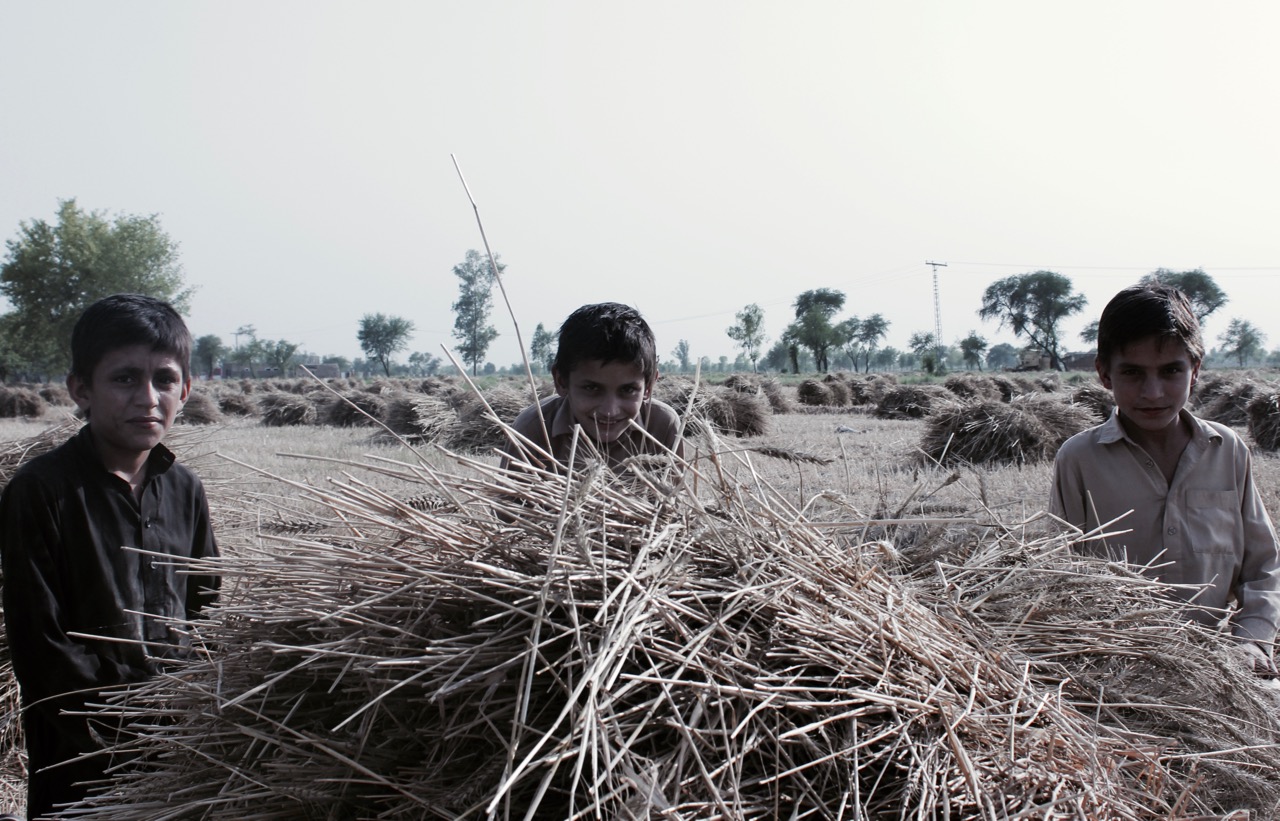
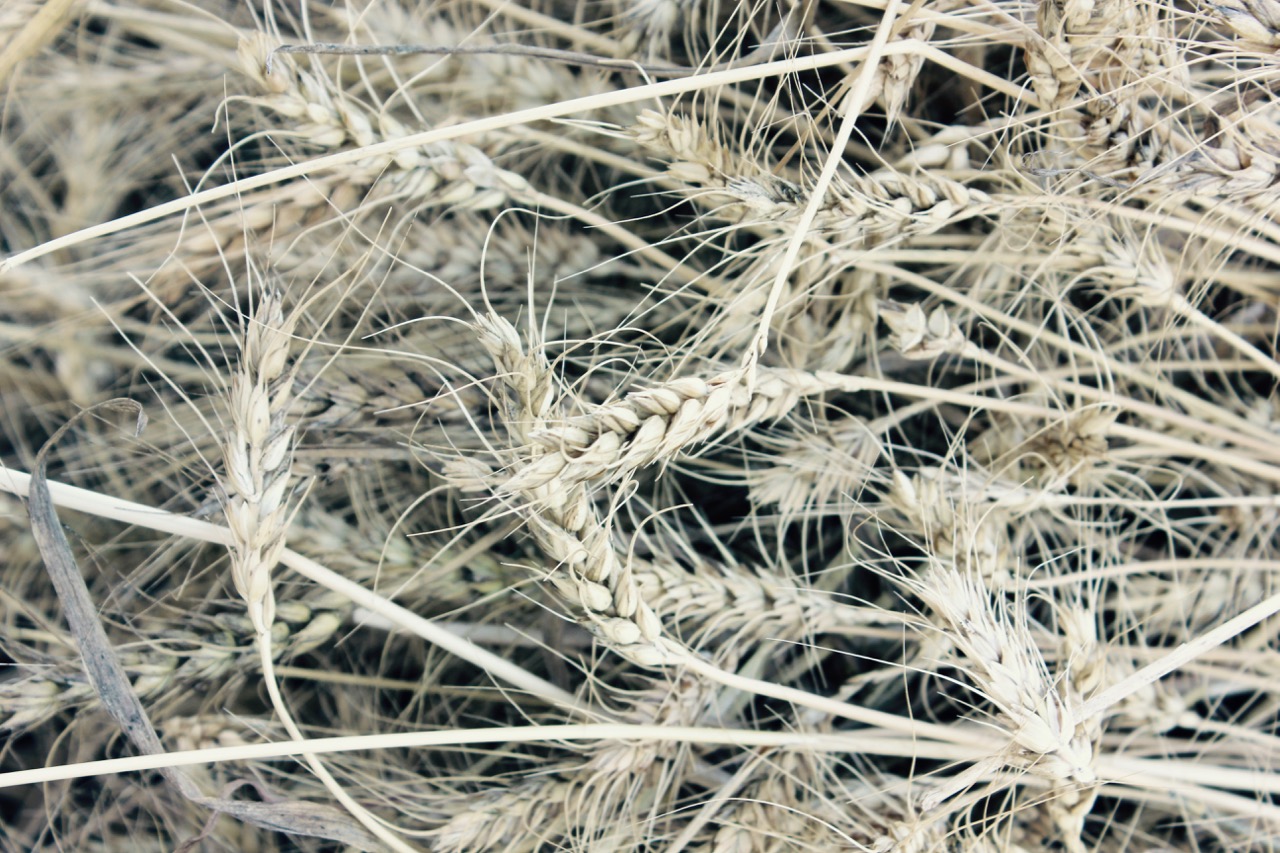
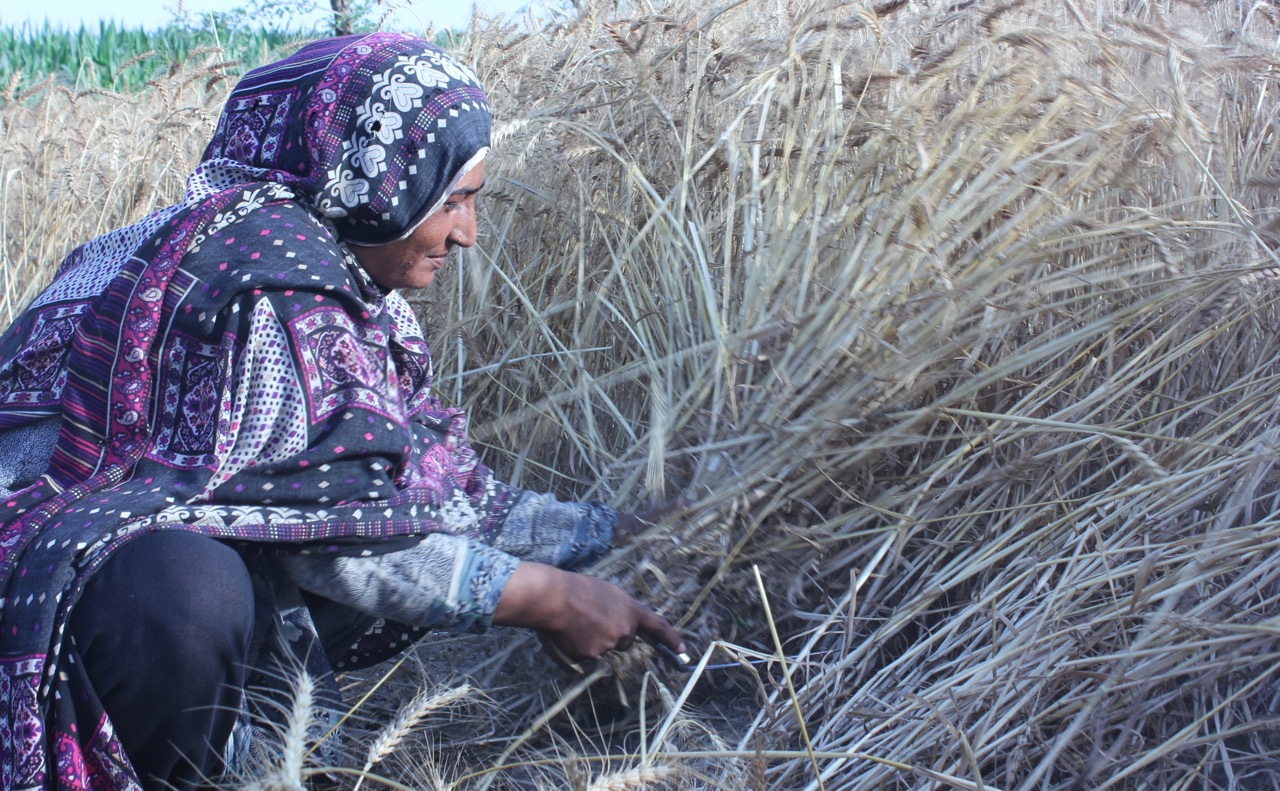
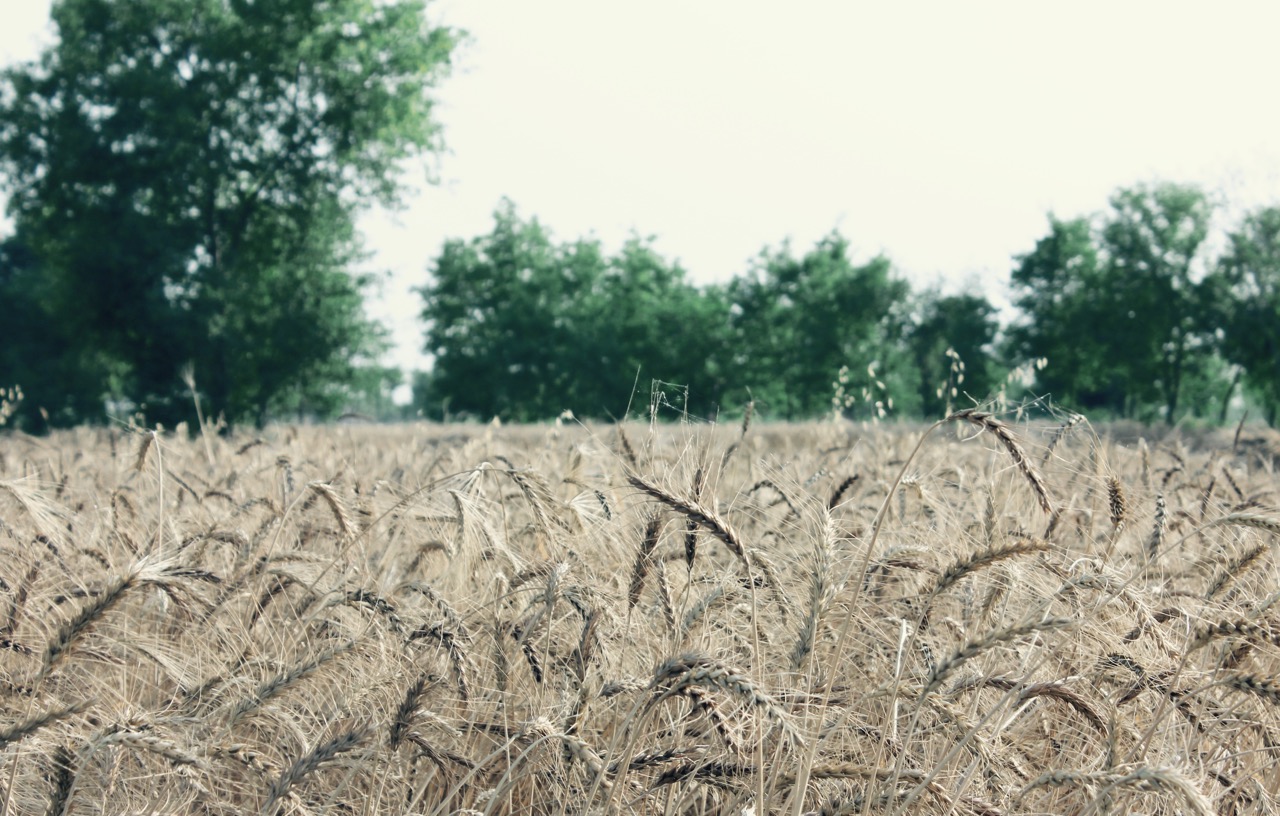
Vaisakh is traditionally the month of crop-harvesting in the Punjab region, in both India and Pakistan. Different permutations also exist in the rest of the countries. It is usually around 13th April that farmers around Punjab will start harvesting their crops and so the month is accompanied with many festivities. Harvesting wheat is the traditional crop that has come to symbolise the month of Vaisakh. The festival of Vaisakhi is an ancient tradition of the Punjab region and while it used to be celebrated throughout undivided Punjabi with village melas or fairs, it is now mostly associated with the Sikh community. For the Sikhs, it marks the birth of the Khalsa, when the 10th Guru, Gobind Singh, laid the foundation of the Khalsa Panth and asked for the five Sikhs to be the first that were formally initiated and baptised into the faith in 1699.

Another important historical event that coincided with Vaiskahi was the Jallianwala Bagh massacre. Thousands of people were gathered in the Jallianwala Bagh in Amritsar to celebrate the holiday and festivities of Vaisakhi. However, in the political volatile climate there was also a curfew and so General Dyer and his troops opened fire on the crowd who were effectively trapped in the public garden complex that only had one exit. Officially 379 people died, unofficially it was closer to 1000 casualties. This is often seen as the beginning of the end of the British Empire in India.

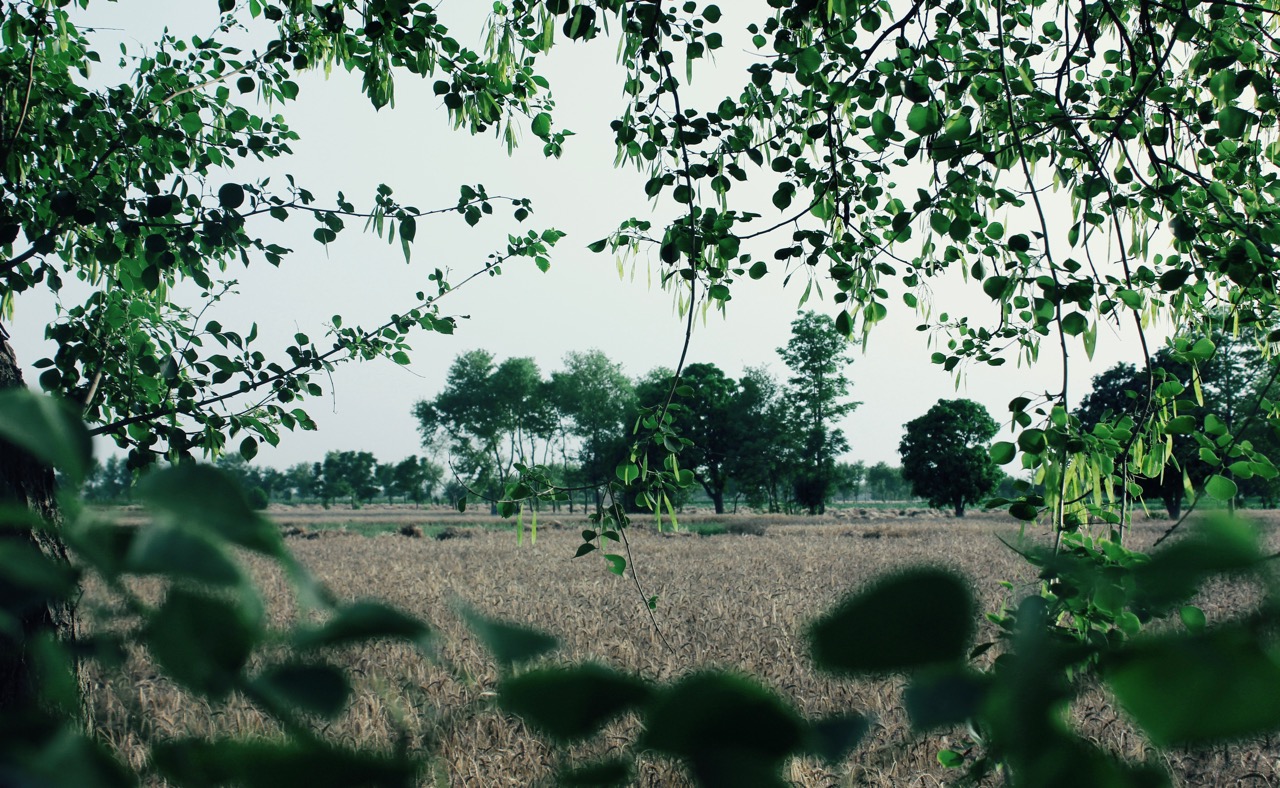
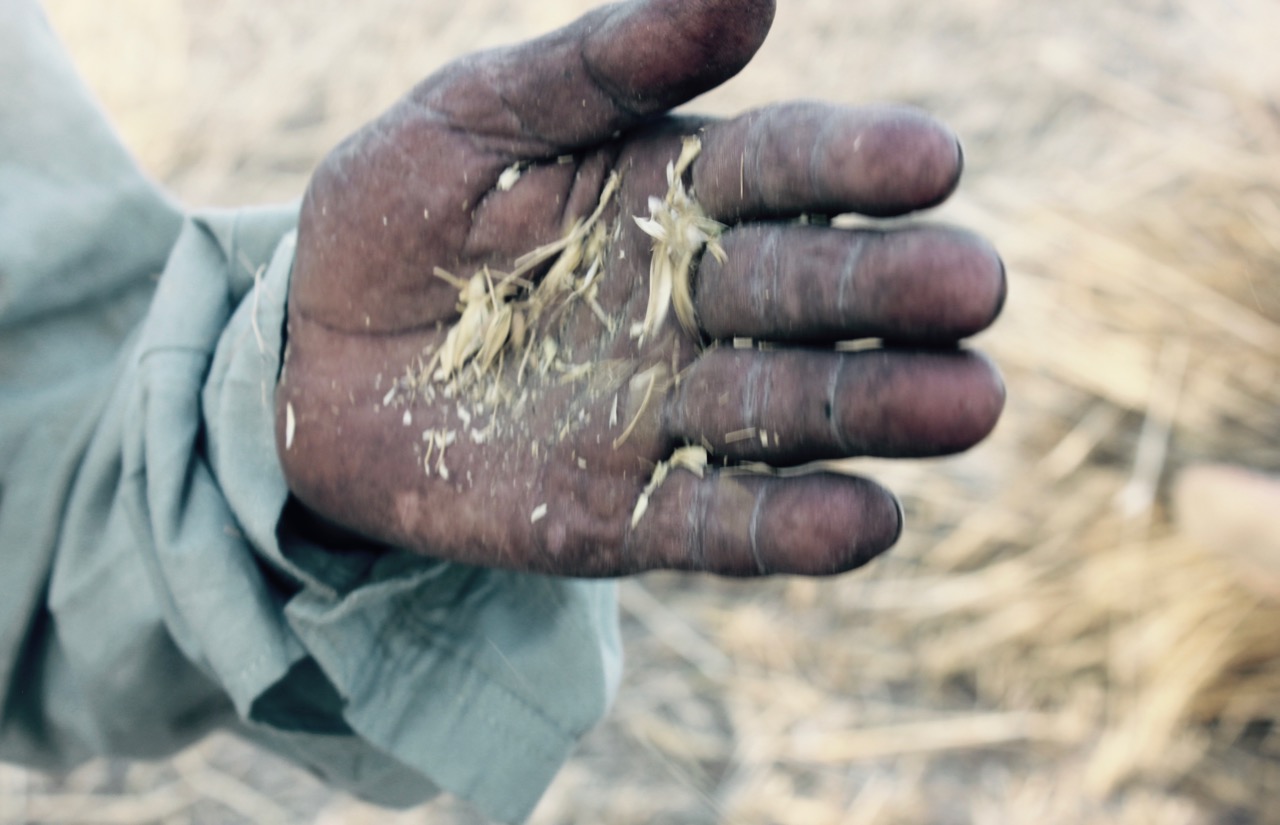
While the month of Vaisakh is still culturally significant on both sides of the border, the religious association means that it has lost some of its importance in Pakistan. The pictures above were taken during a trip to Sahiwal where harvesting wheat was in full flow.

Lata and the compact cassette

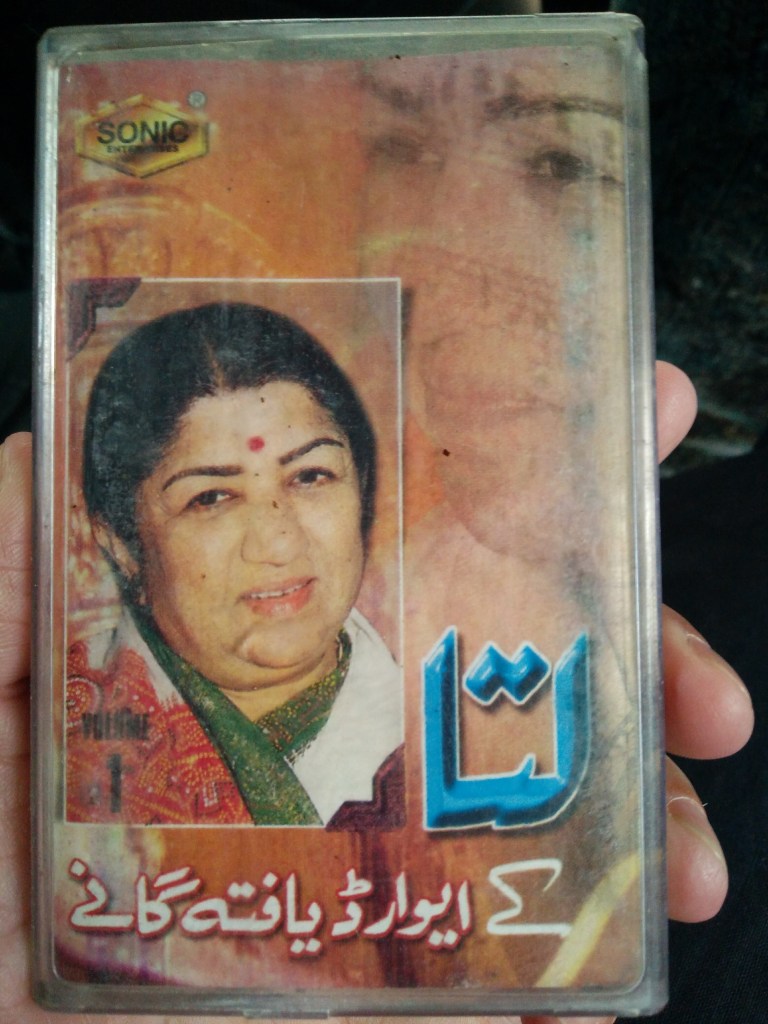
IMG_20170407_085346Imagine the nostalgia of jumping into a 4×4, on a rainy Friday morning in Islamabad, driven around by a German academic, only to discover several music cassettes by Indian singers tucked between the two seats. On close inspection, I discover the music of Lata Mangeshkar – the nightingale of Indian music. Sadly, there was no cassette player in the 4×4 but in that moment, I was transported to the 1980s, listening to popular Bollywood music on the small cassette players, an essential gadget in any household. The numerous compilations in the car were all of music belonging to the golden era of Bollywood music, Mukesh, Rafi and Lata.
Pakistan is not a place I immediately associate with music, you don’t often hear music in people’s houses, nor the streets or even the restaurants and cafés. When I do hear music it often registers in my mind, the sound of music to me is universal and without borders. The melodic sounds can reach out to anyone and everyone and so for me, music is like a breath of air. Growing up, we were always surrounded by music, whether this was religious music or popular music on the radio. Early childhood memories are filled with different genres of music but each one them is associated with a time and place, with the power to transport you back to that time and place.

I can’t exactly remember the last time I might have played something on the compact cassette. I know the earliest interviews I did were all recorded on cassettes, usually on the 60 minute tapes. This was as late 2002, only fifteen years ago. The cassette quickly disappeared after the micro discs and then eventually digital recordings which ended the reign of the cassettes. Digital recordings have been far more versatile, especially when traveling around and not knowing how long the interviews might last. But the cassette, despite its flaws and ability to get stuck in the cassette player, still has the power to evoke emotional memories associated with a bygone era.

Happiness is…

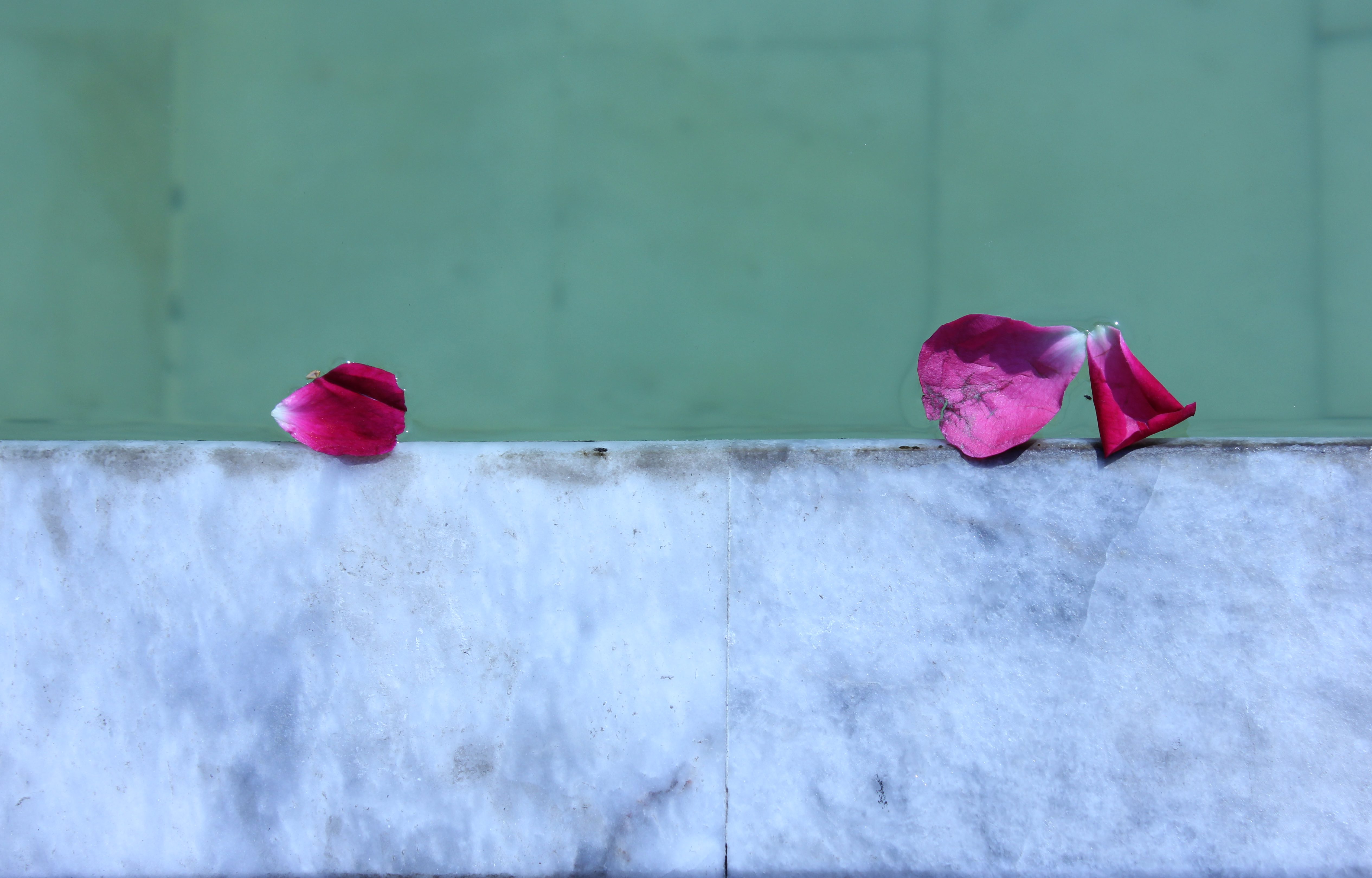
petals wazir khanSo the World Happiness Report is out in which our social progress and levels of happiness can apparently be measured. In June 2016 the OECD made a commitment to “to redefine the growth narrative to put people’s well-being at the centre of governments’ efforts”. Happiness is can therefore be a part of our policy making as we develop and progress further as nations.

Levels of happiness can be determined by many personal factors, as well as social, economic and wealth. Interestingly, China which has experienced enormous growth, is no happier than 25 years ago (positioned 79 on the ranking table). As the list below indicates, India which has also experienced high growths in recent years is not the happiest country in the region. The South Asian perspective throws up some interesting rankings, especially Pakistan. So what makes us happy? Do share your thoughts.

37 Nepal

80 Pakistan

97 Bhutan

110 Bangladesh

120 Sri Lanka

122 India

141 Afghanistan

Read the full report: http://worldhappiness.report/ed/2017/

On a personal note and what made me think about happiness today, a serendipitous recommendation on YouTube which led me to Bhai Gopal Singh. It immediately took me back to my childhood of growing up in Nakuru, Kenya. His shabads were often played on the small cassette player, placed on top of the fridge. It would permeate the bungalow in the mornings and had left endearing and happy memories of childhood. Listening to his voice, immediately takes me back to those moments and so happiness can be captured in those precious memories. Content for time being.

Listen to Bhai Gopal Singh