In the literal sense, jugni means female firefly, which is derived from jugnu, meaning firefly. Metaphorically though jugni means much more. Jugni has often been used by singers and writers to share stories, traveling through time and space, to address societal grievances, political messages. She is spiritual and revolutionary. She is able transcend time and transform herself in every generation. But where did she originate from? According to Aashish Kochhar one possibility is:
No…in 1908, when the British were celebrating the golden jubilee of the British Raj, Bishna and Manda, being illiterate couldn’t pronounce ‘Jubilee’, and called it ‘Jugni’ instead. Or so the story goes. That’s how ‘Jugni’ found its way into the world of Punjabi folk music.
The modern version of jugni though is associated with Alam Lohar, the Pakistani Punjabi singer. Born in 1928 in Gujrat to a family of Blacksmiths (Lohar), he started reciting/singing Sufiana Kalaam, a collection of Punjabi stories and poetry from a young age. His son Arif Lohar continued in his footsteps. Below are both versions of Jugni by Alam and Arif Lohar, both spiritual and popular, and both connecting with different generations.
“Ae way Allah waliyan di Jugni Ji

Ae way nabi pak di Jugni Ji

Ae way Maula Ali wali Jugni Ji

Ae way mere peer di Jugni Ji

Ae way saaray saba di Jugni Ji”

(Jugni is the spirit of God

Jugni is the spirit of the Holy Prophet

Jugni is the spirit of Ali and his followers

Jugni is the spirit of my saints

She is the spirit of all His words)
In 2004 the Indian Punjabi singer, Rabbi Shergil released began to blend the Punjabi folk tradition with acoustic rock, offering a new unique style.
In 2008, jugni was reinvented for Hindi film Oye Lucky Lucky Oye. This is one the first modern films to popularise/depict jugni. Others include: Tanu Weds Manu (2011), Saheb Biwi Aur Gangster (2011), Cocktail (2012), Saheb, Biwi Aur Gangster Returns (2013), Queen (2013), Kaatru Veliyidai, (2017).
In 2011 Jugni, a Pakistani Punjabi-language film, was released. The film revolves around the main character of Jugni, and brought folk singer Arif Lohar back on the silver screen after eleven years.
In 2013 the Nooran Sisters performed a powerful rendition at the Nakodar Mela. Sultana Nooran (b. 1992) and Jyoti Nooran (b. 1994) are from Jalandhar and born to family of Sufi musicians. They gained wider popularity through contributions to Bollywood music, craving out a niche space for their strong and distinct style.
One of the latest incarnations is by global Punjabi singer Dailjit Dosanjh featuring Tanzanian artist, Diamond Platnumz, who has a big following in East Africa. The 2022 collaboration is interesting and strategic given the South Asian connections with East Africa. The music/lyrics present a very seamless fusion of Punjabi and Swahili.
There are many other versions, and these are just some of the different incarnations of Jugni in Punjabi popular culture. Read further:
Hasnain Kazmi, Syed Shabihul. “Jugni, dhola and mahiya: Comparing three genres of punjabi folklore.” Pakistan Perspectives 25, no. 2 (2020).
AMIR, MARIA. “Chapter Twelve Generation Jugni: Mapping The Influence Of Folklore.” A Cartographic Journey of Race, Gender and Power: Global Identity 149 (2021).
Parmar, Prabhjot, and Amandeep Kaur. “2 Kisan Protests in Punjab 1907–2021.” Agrarian Reform and Farmer Resistance in Punjab: Mobilization and Resilience (2022).
I was preparing for a forthcoming History conference in Lyallpur when I started browsing and jumped from one rabbit hole to another. Sometimes research is like that, you need to explore and get lost in the lanes of history to find something. I did get the inspiration I wanted but I also ended up with more information than I needed. Amongst all of this is a list of some well-known people who were born in Ludhiana or Lyallpur. I was more interested in the direct links between these cities and the people that migrated between these two, as my I have a long-standing research and personal interest in both cities. However, those links were not always present, but it is still interesting to see the kind of people who emerged from these localities and migrated following the Partition.
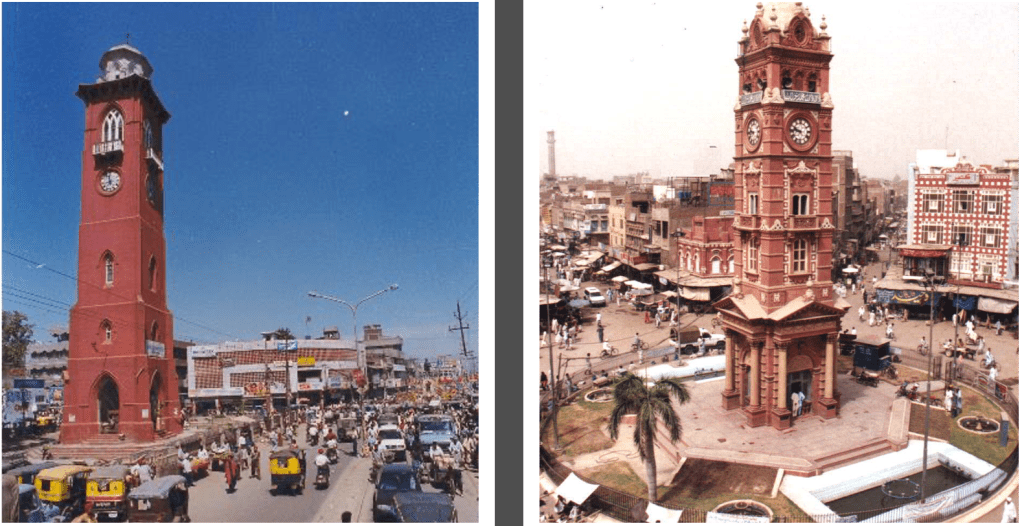
Ludhiana and Lyallpur were in fact only small towns before Partition, and interestingly both have iconic colonial clock towers in the town centre; both are important industrial textile hubs in the region; both had 62% ‘other’ populations prior to 1947 (according to the 1941 census, 62% Muslims lived in Ludhiana and 62% Sikhs/Hindus in Lyallpur); and finally, both function as important diasporic cities in contemporary Punjab(s).
Typically I tried to find women, but sadly the list of people is mostly male bar two! I hope to continue adding to the list as I find more people or please leave a comment if you know any other people with Ludhiana-Lyallpur links.
Note: the source for the information below is mainly through browsing and do not claim it as my own work. I have only selected a people I was interested in and that were born before 1947 and migrated following the Partition.
From Ludhiana…
Abu Anees Muhammad Barkat Ali Ludhianvi (1911 – 1997) was a Muslim Sufi who belonged to the Qadiri spiritual order. He was the founder of the non-political, non-profit, religious organisation, Dar-ul-Ehsan. Abu Anees’s followers spread all around the world and especially in Pakistan. He was born in Ludhiana where his father was a landlord.
Agha Ali Abbas Qizilbash also known as Agha Talish, (1923 –1998) was a Pakistani actor who made his debut in 1947 and was mostly known and recognized in Pakistan for playing character actor or villain roles. Talish was honoured by a Pride of Performance award, by the Government of Pakistan in 1989. Talish was born in Ludhiana, and his breakthrough film in Pakistan was film producer Saifuddin Saif’s Saat Lakh (1957) where his on-screen performance for this popular hit song was widely admired, Yaaro Mujhe Maaf Rakho Mein Nashe Mein Hoon.
Ajaz Anwar (1946-) is a Pakistani painter. He was a gold medalist at Punjab University, and he completed his M.A. in Fine Arts from Punjab University. Later, he went to teach at National College of Arts Lahore. His watercolour paintings show the grandeur of the old buildings and the cultural life in Lahore. Born in Ludhiana in 1946, his father was a cartoonist who apparently had stirred his passion from childhood and from whom he drew his inspiration.
Anwar Ali (1922-2004) was a Pakistani Editorial Newspaper Cartoonist in Pakistan Times based in Lahore. Anwar Ali was the creator of famous character Nanna, was the first newspaper cartoonist associated with The Pakistan Times. He was born in Ludhiana, where he spent his childhood. He did his BA from Government College Ludhiana.
Chaudhary Abdul Hayee Gujjar (1921 – 1980), popularly known by his pen name Sahir Ludhianvi, was an Indian poet who wrote primarily in Urdu in addition to Hindi. He is regarded as one of the greatest film lyricists and poets of twentieth century India. Sahir was born in Karimpura, Ludhiana to a Punjabi Muslim Gujjar family.
Habib-ur-Rehman Ludhianvi (1892 – 1956) was one of the founders of Majlis-e-Ahrar-e-Islam. He belonged to an Arain (tribe) and was a direct lineal descendant of Shah Abdul Qadir Ludhianvi, the freedom fighter against British Colonial rule during the Indian Rebellion of 1857. He chose to stay back in Ludhiana to continue representing the thousands of Muslims still remaining there after the partition in August 1947. The ancestral masjid in Field Ganj still exists today.
Hameed Akhtar (1923 – 2011), was a newspaper columnist, writer, journalist and the secretary-general of the Progressive Writers Association in Pakistan. He was also the father of TV actresses Saba Hameed, Huma Hameed and Lalarukh Hameed. He finished his basic education in Ludhiana and was a childhood friend of renowned poets Sahir Ludhianvi and Ibn-e-Insha
Munawar Sultana (1924- 1995) was born in Ludhiana and was a Pakistani radio and film singer. She is known for vocalizing first ever hit Lollywood songs like, “Mainu Rab Di Soun Tere Naal Piyar Ho Gya” (Film: Pheray 1949), “Wastae Rab Da Tu Jaanvi We Kabootra” (Film: Dulla Bhatti 1956),and “Ae Qaid-e-Azam, Tera Ehsan Hay, Ehsan” (Film: Bedari 1957).
Saadat Hasan Manto (1912 – 1955) was a Pakistani writer, playwright and author who was active in British India and later, after the 1947 partition of India, in Pakistan. Saadat Hassan Manto was born in Paproudi village of Samrala, in Ludhiana district to a Muslim family of barristers. Ethnically the family were Kashmiri.
From Lyallpur
Grahanandan Nandy Singh (1926 – 2014) was an Indian field hockey player who won two gold medals, at the 1948 and 1952 Summer Olympics. There is a documentary film on the team by Bani Singh titled, ‘Taangh/Longing’. Singh began playing hockey while studying at the Government College in Lahore, serving as captain of their hockey team in 1945 and 1946. After the Partition, he moved to Calcutta and played for Bengal when he was selected to the 1948 Indian Olympic team.
Harnam Singh Rawail (1921 – 2004), often credited as H. S. Rawail, was an Indian filmmaker. He debuted as a director with the 1940 Bollywood film Dorangia Daku and is best known for romantic films like Mere Mehboob (1963), Sunghursh (1968), MehboobKi Mehndi (1971) and Laila Majnu (1976). Rawail was born in Lyallpur and moved to Mumbai to become a filmmaker.
Inderjeet Singh (1926 –2023), also known as Imroz, was an Indian visual artist and poet. He was the partner of the poet, novelist, and writer Amrita Pritam, and they lived together until Amrita’s death in 2005. Inderjeet Singh was born in Chak number 36, Lyallpur.
Jagjit Singh Lyallpuri (1917 –2013) was an Indian politician. He was the oldest surviving member of the founding Central Committee of the Communist Party of India (Marxist). Prior to the Partition of India, Lyallpuri’s family owned roughly 150–180 acres in Lyallpur. The family moved to Ludhiana following the Partition.
Jaswant Rai Sharma (1928 –2017), popularly known by his pen name Naqsh Lyallpuri, was an Indian ghazal and Bollywood film lyricist. He is best known for the songs “Rasm-e-Ulfat Ko Nibhayen” (Dil Ki Rahen, 1973), “Ulfat Mein Zamaane Ki” (Call Girl, 1974), “Tumhe Ho Na Ho” (Gharonda, 1977), “Yeh Mulaqaat Ek Bahana Hai ” (Khandaan, 1979), “Pyar Ka Dard Hai” (Dard, 1981), and “Chitthiye Ni Dard Firaaq Vaaliye” (Henna, 1991). He was born in Lyallpur to a Punjabi Brahmin family, where his father was a mechanical engineer.
Lal Chand Yamla Jatt (1910 – 1991) was a noted Indian folk singer in the Punjabi-language. His trademark was his soft strumming of the tumbi and his turban tying style known traditionally as “Turla”. Many consider him to be the pinnacle of the Punjabi music and an artist who arguably laid the foundation of contemporary Punjabi music in India. He was born to Khera Ram and Harnam Kaur in Chak No. 384, Lyallpur. After partition, they relocated to the Jawahar Nagar, Ludhiana.
Prithviraj Kapoor (1906 –1972) was an Indian actor who is also considered to be one of the founding figures of Hindi cinema. He was associated with Indian People’s Theatre Association as one of its founding members and established the Prithvi Theatres in 1944 as a travelling theatre company based in Bombay. He was born in Samundri into a Punjabi Hindu Khatri family. His father, Dewan Basheshwarnath Kapoor, was a police officer in the Indian Imperial Police. His grandfather, Dewan Keshavmal Kapoor, and his great-grandfather, Dewan Murli Mal Kapoor, were Tehsildars in Samundri near Lyallpur.
Romesh Chandra (1919 – 2016) was a leader of the Communist Party of India (CPI). He took part in the Indian independence struggle as student leader of CPI after joining it in 1939. He held various posts within the party. He became president of the World Peace Council in 1977. He was born in Lyallpur and got his degree in Lahore and another one from Cambridge.
S.D. Narang (1918-1986) was born in Lyallpur. He was a director and producer, known for Dilli Ka Thug (1958), Anmol Moti (1969) and Shehnai (1964). He graduated in Biology from Government College, Lahore and did his MBBS from King Medical Collage, Lahore.
Sunder Singh Lyallpuri (1878 – 1969) was a leading Sikh member of the Indian independence movement, a general of the Akali Movement, an educationist, and journalist. Lyallpuri played a key role in the development of the Shiromani Akali Dal, and in the Gurdwara Reform Movement of the early 1920s and also founding member of Central Sikh League.
Teji Harivansh Rai Srivastava Bachchan (1914 – 2007) was an Indian social activist, the wife of Hindi poet Harivansh Rai Bachchan and mother of Bollywood actor Amitabh Bachchan. Teji was Born into a Punjabi Sikh Khatri family in Lyallpur.
During a recent trip to Doha, I found myself intrigued by the history of pearl diving. I must admit I knew little about this and it turned out to be one of the oldest professions in Qatar, dating back to around 4,600 BCE. Before the discovery of oil and gas, the inhabitants of the Gulf’s Arab coast relied on diving for natural pearls as their economic livelihood. Pearls from the Gulf were traded to India, Persia, and the Ottoman Empire. In the mid-19th century, the pearl industry rapidly expanded to meet the global demand as pearls became a precious and much sought-after luxury item.
It was typically the male member of the family who would go out during the pearling season, which was usually during the four summer months. The women stayed back, managing the household and all the associated work. The boats departed from ports like Manama, Doha, Dubai, and Abu Dhabi. Divers, sailors, and “pullers” (who brought divers up from the seabed) participated. Advances were often given to crews by boat captains (nakhudas), who financed the season. Pearl merchants (tawawish) paid nakhudas upon pearl delivery.
The work itself was perilous and dangerous; it was technical and incredibly hard work, where some of the divers never made it back home. The pearl divers endured many obstacles, from the burning sun to the treacherous waters. Many men would stay in one ship cramped together for months to sustain their families. During their dives, they would hold their breaths with the help of a nose peg for up to two minutes at a depth of up to 18 metres. This is no mean feat!
Interestingly the museums made some comparison of this work with the discovery of oil. Both relied heavily on labour who were separated from their families for long periods. It was hard and arduous, gruelling in the summer heat, but necessary to sustain livelihoods and family life in the desert where there few other alternatives. The beneficiaries typically were a handful of people, whether this was from the pearl industry or “black gold.” From the 1920s, with the discovery of oil, pearl diving itself began to decline and led many divers to leave the profession.
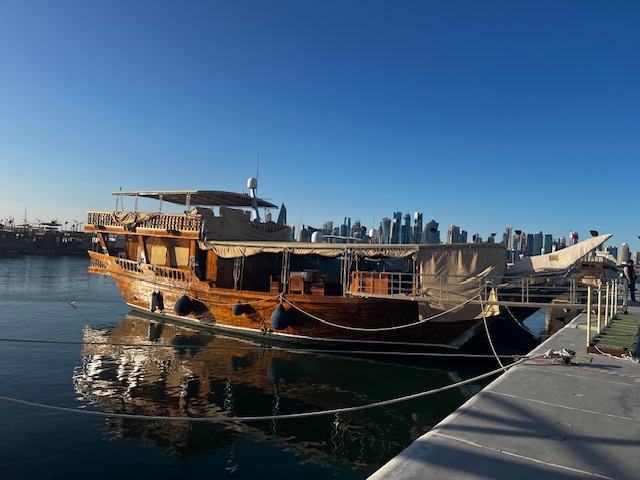
At the same time, countries such as Japan, began cultivating pearls, leading to a decline in the Arabian trade. These cultured pearls became more abundant and affordable than the Gulf-harvested pearls. The pearl fishing fleets shrank, and towns’ populations dwindled. But despite this, it remains an integral part of Qatar’s national heritage. If you ever visit Doha, you will you’ll find nods to Qatar’s pearl diving past throughout the capital city, including the dhow boats at the harbour, traditionally used for collecting pearls; the pearl sculpture at Corniche which is an open oyster shell statue with a pearl inside; or then the artificially built Pearl Island which exudes modernity, technological advancement, while paying homage to the past.
The preservation of this heritage can also be gleaned from the traditional pearl diving songs. The songs blend elements from Bedouin, East African, Persian and Indian styles, creating a rich and diverse musical heritage. They evoke the spirit of the sea, resilience, and the camaraderie of pearl divers. It is often through this orality that one can still get a sense and appreciate the past.
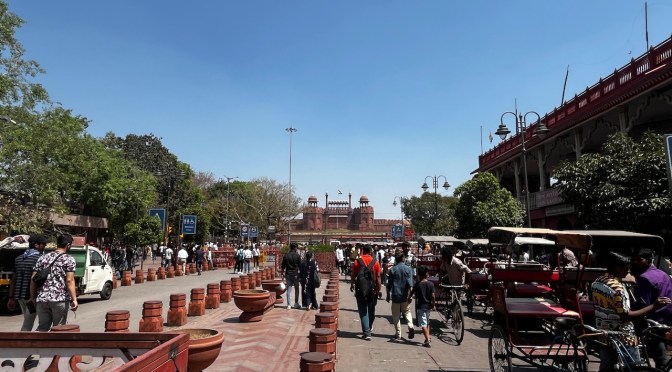
I recently had the opportunity to revisit an old favourite place of mine, Purani Dilli, with a friend. Old Delhi, despite the wider socio-economic and political changes emanating from neighbouring New Delhi, retains much of its previous charm of being a vibrant and colourfully diverse locality. The constellations around Chandni Chowk and the labyrinth of narrow lanes overflowing with people, trade, and character, fill the hearts and bellies of locals and tourists alike. There are of course signs of change where the old meets the new, and reinvention is indeed necessary for survival. In this endeavour, the main thoroughfare has been pedestrianised, but cycle rickshaws and people continue to jostle for space. You can buy almost anything from here, it is a complete eco-system of co-existence.
History of the area
It was Shahjahan (r. 1628 –1658), the fifth great Mughal, who ordered his famous chief architect Ustad Ahmad Lahori (who also designed the Taj Mahal) to build this then-walled city between 1638 and 1649, which contained the imposing red sandstone fortress of Lal Qila and the Chandni Chowk, the main street. Shahjahanabad (abode of Shah Jahan), or as it is more popularly known as Purani Dilli/Old Delhi, refers to that walled city where the Mughal court, army, and household moved from Fatehpur Sikri in 1648, which then become the heartbeat and commercial centre of the empire.
Biswas (2018) notes that the city developed along an “organic street pattern…with signature characteristics such as different activities and trades, clusters of houses based on closeness and common interests and social ties, which it still depicts today. The lanes and the streets were designed for an easy movement of pedestrians and animal driven vehicles, which today have been taken over by two- wheelers, electronic and manual rickshaws…”
It remained the capital of the Mughals in India until the Revolt of 1857, by when the East India Company and afterwards the British Crown Rule had shifted the seat of power to Calcutta, only to return back to Delhi in 1911, where they too commenced with the construction of a new modern administrative headquarters designed by Edwin Lutyens and Herbert Baker, which was formally inaugurated in 1931. To distinguish between these two empires and spaces, the older city became Old Delhi and New Delhi become the new citadel with its palatial bungalows and manicured wide streets. Since 2019, the current BJP Government has commenced another phase of construction with the Central Vista Project led by a team under Bimal Patel. We can therefore see layer upon layer, phase after phase of architectural stamping, ushering in its own ideological imprint.
The Walled City
For nostalgia, a bygone era and character, especially for a historian, nothing matches Purani Dilli. The walled city brings with it rich heritage, historic buildings and the intimate liveliness of a small community.
Jain (2004) observes that “The Red Fort, Jama masjid and Chandni Chowk have been jewels in the crown of Shahjahanabad. Chandni Chowk is the centrepiece and dominant axis of the Walled City. The original Chandni Chowk had octagonal chowks with a water channel running through the centre. Its wide boulevard with prestigious buildings and bazar created a vista between the magnificent Red Fort and Fatehpuri Mosque. With the passage of time there has been an all-round degradation and deterioration of this glorious boulevard, which can be attributed to several reasons, like over-crowding, markets, wholesale trade, rickshaws and traffic, unauthorised constructions, conversion of heritage buildings, over-riding commercial interests and private motives, coupled with lack of controls.”
Composite culture
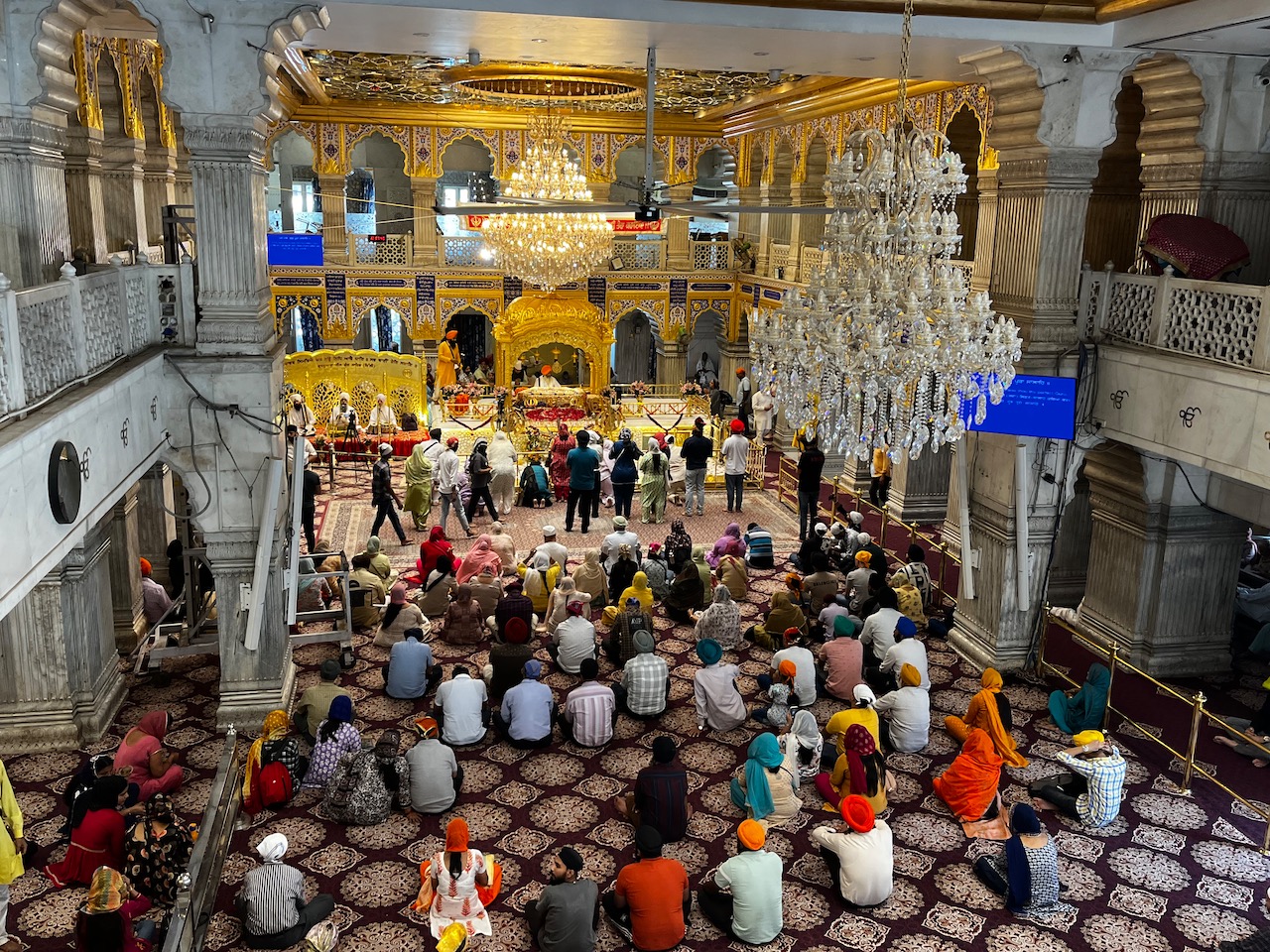
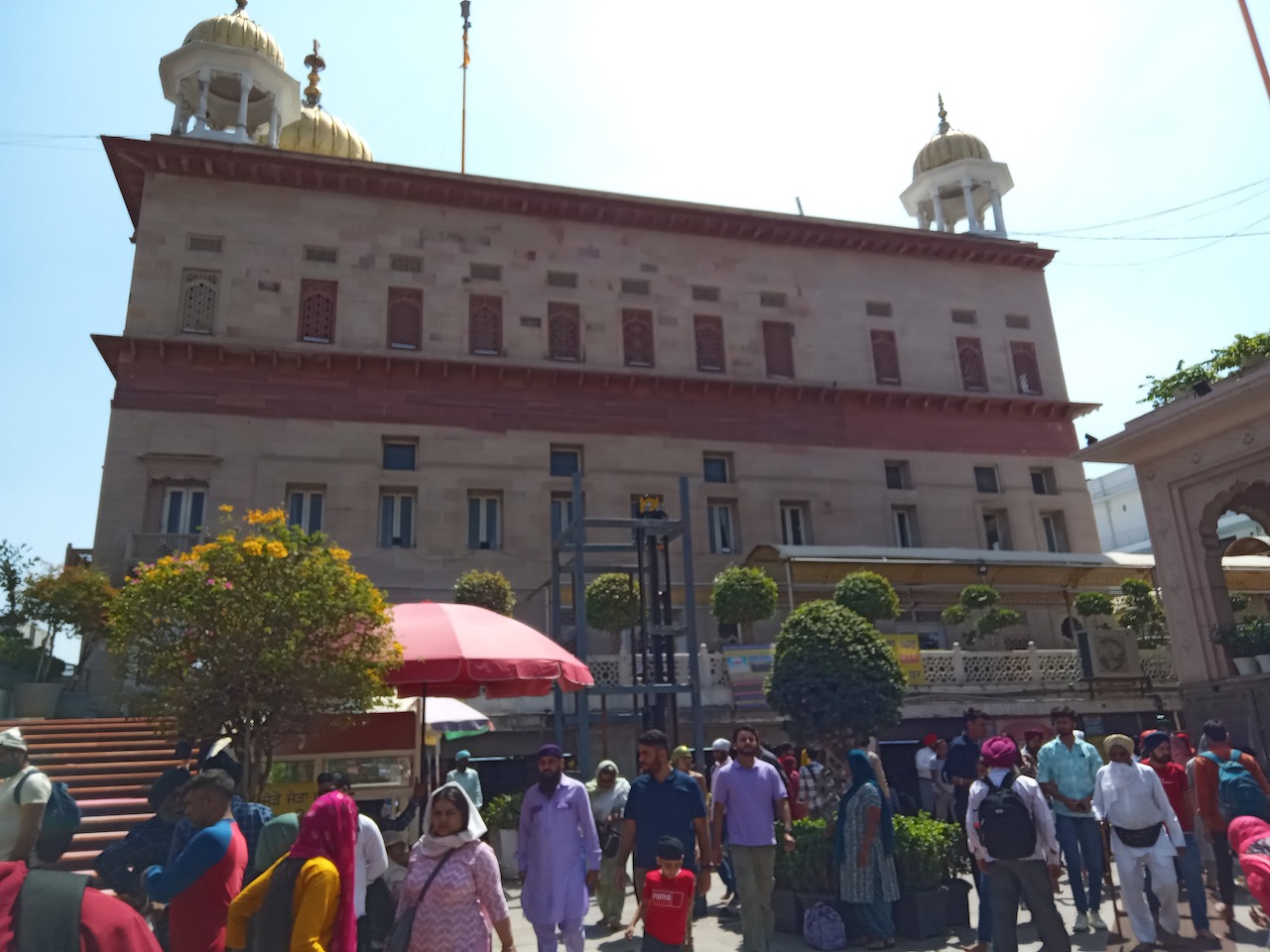
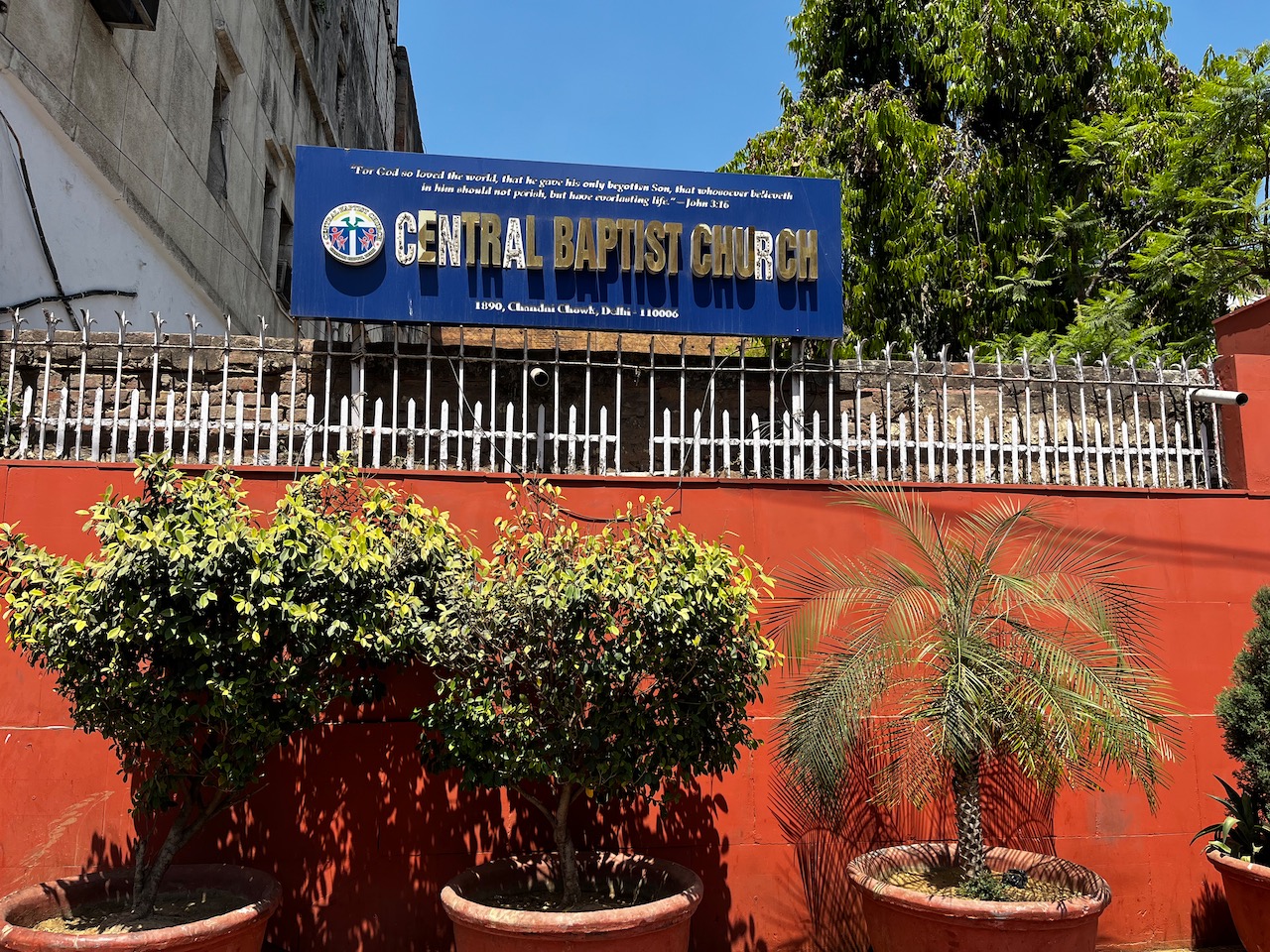
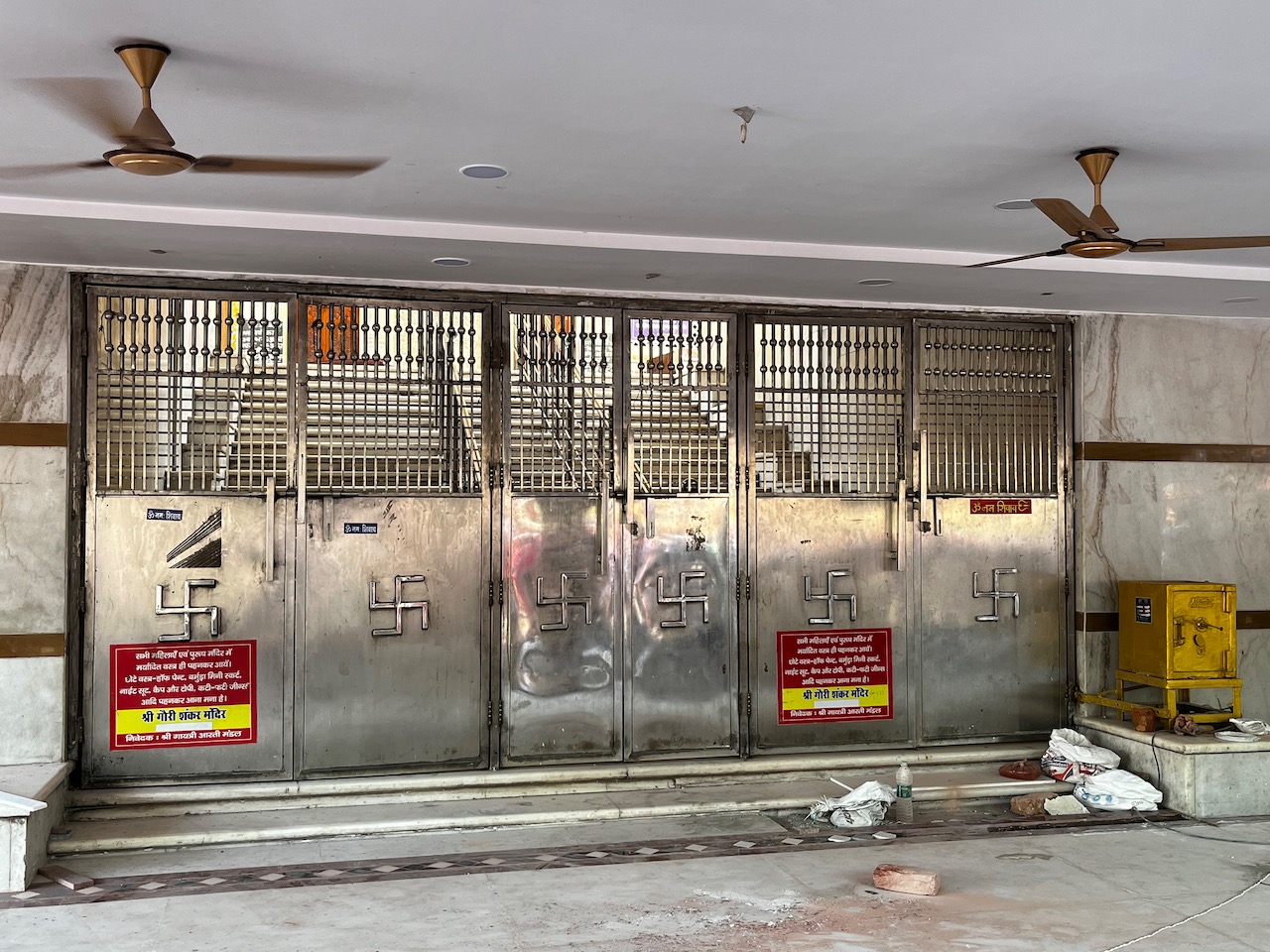
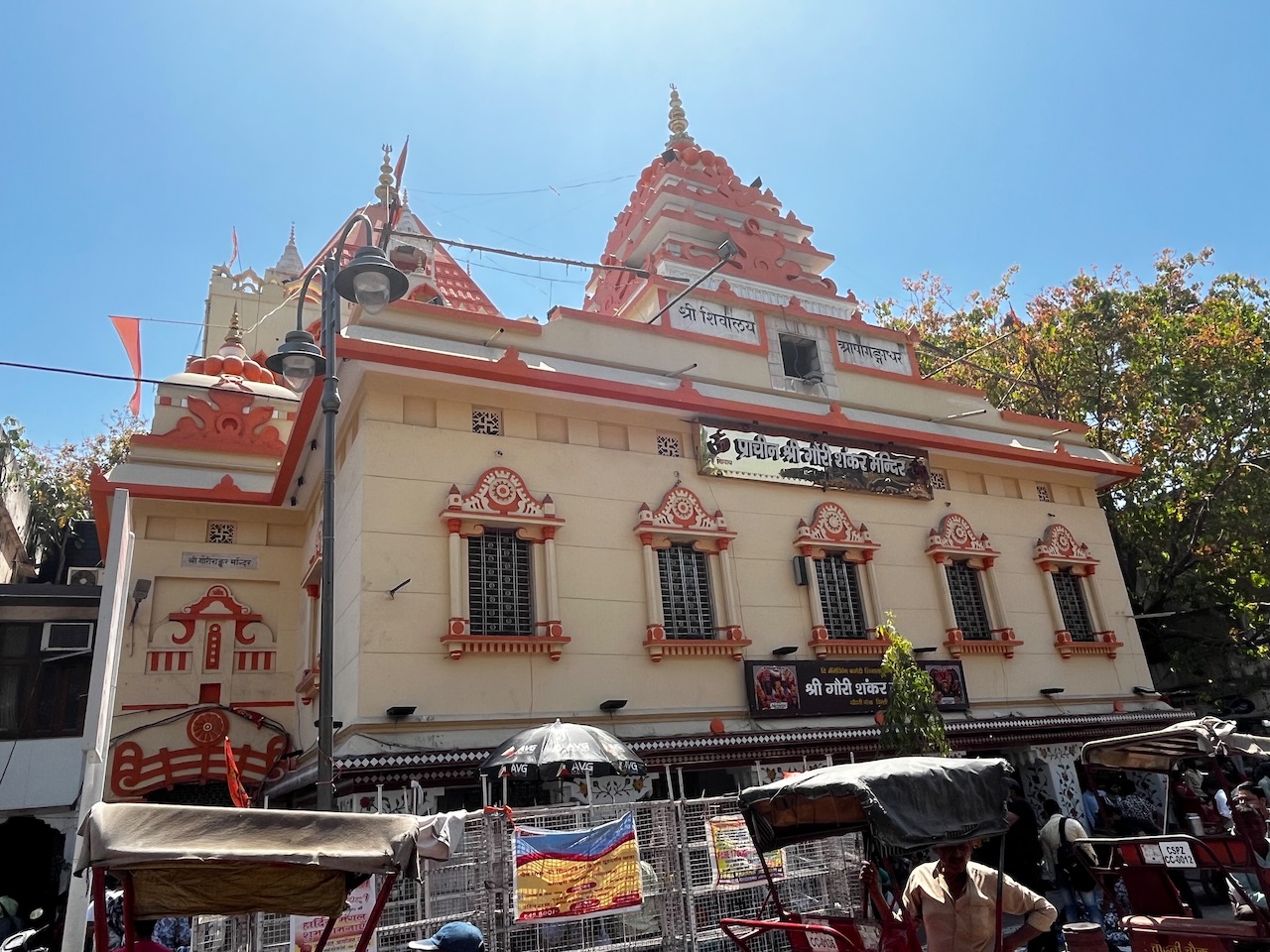
There are plenty of people who organise various walking tours of Old Delhi, as it attracts tourists from abroad and locals via the metro that has opened up the space that perhaps looked challenging before. My visit was an impromptu trip, I had some time and thought it would be nice to revisit this area after many years. I had planned to visit the Gurdwara, the Masjid and the Parathe wali gali! As I burnt off the parathas, the striking multi-faith milieu mingling into multi-cuisine eateries, left the heart warmed.
Biswas (2018) provides a detailed summary of the rich diversity present in Chandni Chowk. “In the northern sphere of the city, are the St. James’ Church (the oldest church in the city of Delhi), St. Mary’s Church, remains of Kashmiri Gate, Dara Shikoh’s library, the Lahori gate. In the southern part of the city, the key highlights are the Kalan Masjid, Ajmeri Gate, Holy Trinity Church, Razia Sultan’s grave, Turkman Gate, Havelis of Kucha Pati Ram, Anglo-Arabic School. With these divisions, the centre of the walled city is adorned with the harmonious street of Chandni Chowk, where the sacred spaces or the worship places of all major religions are located and co-exist amicably…The built heritage of the walled city comprises the grand Jama Masjid, the glorious Red Fort and many beautiful Jain temples of the two sects, numerous Hindu temples devoted to a multitude of gods, the Gurudwaras, the churches, the madrassas, the havelis of the Mughal and the post- Mughal era, still survive [ing] against their slaughter at the hands of the modernity.”
Undoubtedly the area has undergone change during the past 400 years, with each reign adding and leaving new layers. The walled city with the Qila and Masjid was the centre piece of the Mughal court, until the British transformed the former into military barracks. The British period marked by the revolt of 1857 saw vast areas being razed to the ground, some places only surviving due to the resultant outrage. With the birth of independent India in 1947, there was again vast destruction, loss of life and mass migration of people. The new contemporary socio-political anxieties mean we are perhaps less sure about the role of these places as they are confined to the past, while we celebrate and sell their associated heritage in the present. The Delhi Government is trying to beautify and make this a tourist hub, but that too must compete with conflicting agendas of the future. But for now, the spirit and roots of the Ganga-Jamuna Tehzeeb are quietly visible.
References and further reading:
Rana Safvi, Shahjahanabad: The Living City of Old Delhi, (HarperCollins India, 2020)
Swapna Liddle, Chandni Chowk: The Mughal City of Old Delhi, (Speaking Tiger, 2017)
Payushi Goel, Foram Bhavsar ‘Evaluating the Vitality of an Indian Market Street: The Case of Chandni Chowk, Delhi’ in Utpal Sharma, R. Parthasarathy, Dr Aparna (eds), Future is Urban: Liveability, Resilience & Resource Conservation (Routledge, 2023)
Sometime last year I was having dinner at the Punjab restaurant in Covent Garden, considered to the “first and oldest Punjabi, North Indian Restaurant in the UK, serving distinctive homestyle Punjabi cuisine…” It was established by Sardar Gurbachan Singh Maan in 1946, initially in Aldgate, and then shifting to Covent Garden in 1951. Maan came to the UK from Mehsumpur, in the Jalandhar District of Punjab, in what was then British India. The restaurant and café provided the familiar tastes of Punjab to the small number of Indians living in and around 1940s and 1950s London. It has since then become a go to place for many, with queues often forming outside for those hoping to chance a table for the culinary delights offered inside.
The interior is mostly simple and unfussy, but nostalgic pictures cover the wall spaces everywhere in the restaurant. They transport you to a different time and place. Quite often the pictures are of the various royal families of Punjab, whether this is the iconic Ranjit Singh or the Maharaja of Patiala; it doesn’t really matter, they provide the regal, historic and nostalgic backdrop to a bustling Punjabi meeting place in London. In between these opulent people, however, are also everyday images of South Asians and of Punjabis living in the UK.
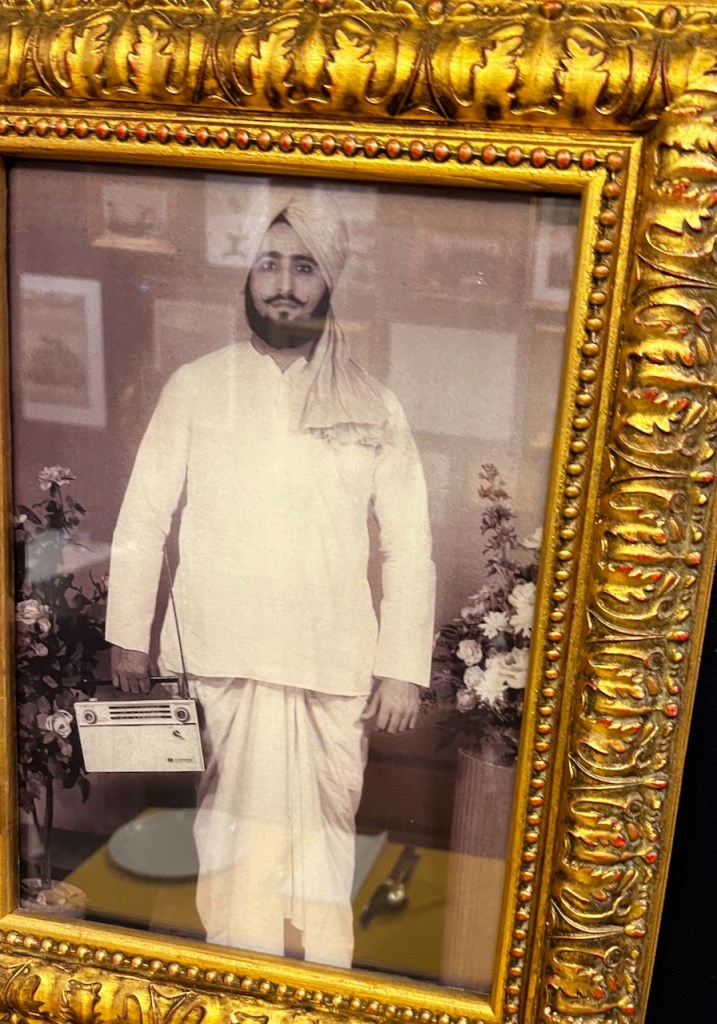
As I sat down, anxiously looking forward to my Punjabi feast, I had already decided I wanted saag, I started to curiously scan the photographs around me. Immediately a picture behind me caught my eye, it looked familiar, very familiar! It was a picture featured in a book that I did many years ago, Coming to Coventry: Stories from the South Asian Pioneers (The Herbert, 2006). The picture was of Gurdail Singh Johal, who had posed for this photograph in a traditional Punjabi kurta and tamba, while holding a transistor radio. It is a beautifully striking image, capturing the need to retain some of the cultural traits of “home”, but adapting and embracing new technologies. Like many other early migrants from Punjab, Johal migrated to Coventry in 1960 from Jalandhar, Punjab.
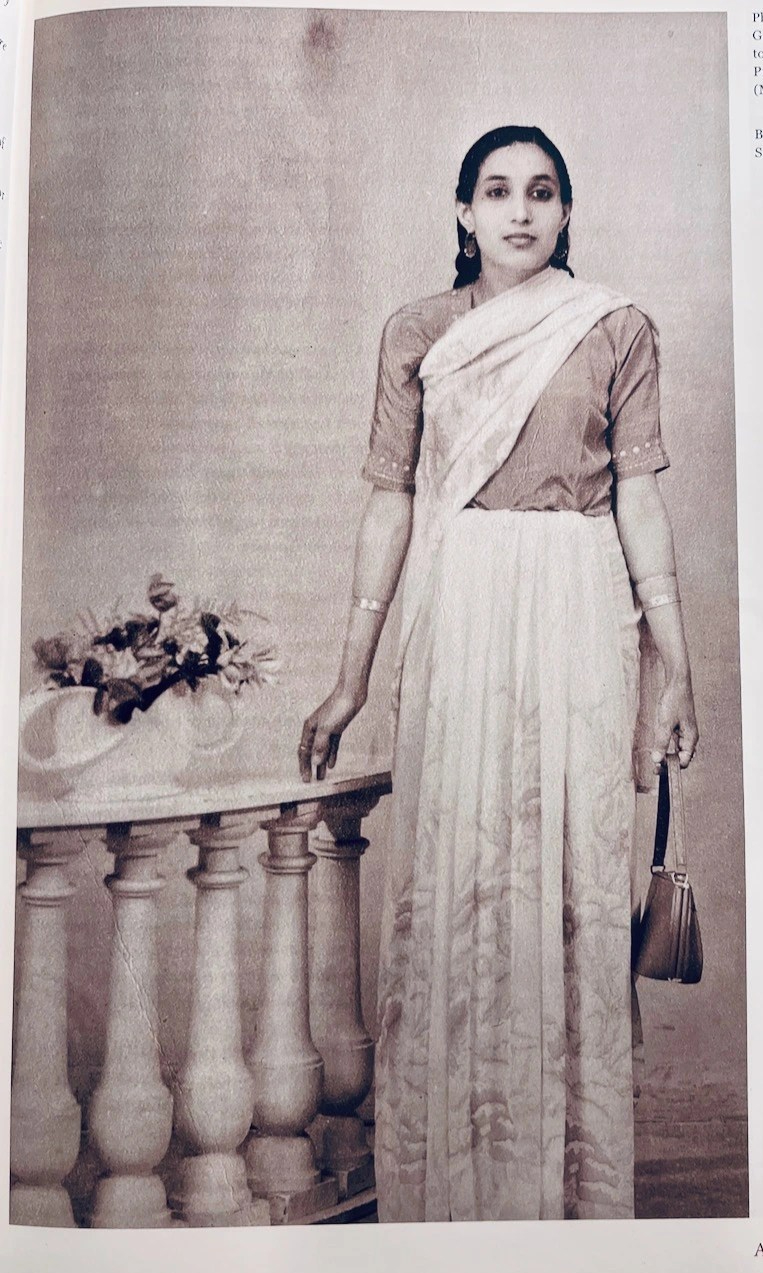
As you turn the page from Johal’s picture on page 17, there is another equally striking image of Gurmeet Kaur on page 19. This one was taken in Studio Taylor on Primrose Hill in 1959. Gurmeet is dressed in a sari, elegantly draped, and accessorised with some simple bangles and small earrings. Like Johal, Gurmeet is also holding something in her hand; the handbag conveys elegance and affluence. Mostly likely it belonged to her rather than being a prop. Both photographs have the ubiquitous floral bouquet in the backdrop, adding texture, colour and framing for the main object. Both images are important in showing how Johal and Kaur seamlessly integrate traditional dress with the modernity around them.
The studio pictures of Johal and Kaur are typical of that era where mass photography was not widespread and ownership of cameras was limited to those with means, and thus the average person could only indulge in the occasional studio photograph. Everyone dressed up and posed for the special occasion; in fact, I have many similar photographs in my own family album. It was an opportunity not only to capture a time and place, but perhaps also to preserve and show how one had progressed and advanced, especially when in a “foreign” land. It was versatile enough to share with family back home as it could be posted, and to show how they had altered their material status and to showcase the fruits of migration. Posing with a material object therefore was not just a prop in a studio picture, it was a statement about them and their class status. For the photographer it enhanced the aesthetic value of the composition, but for the people, it enhanced their status amongst their family and peers.
It has been a while since I’ve had a chance to post something substantial on my Blog, for the pressures of term-time mean that there are few opportunities to sit down and ponder. However, today was 29th February and I wanted to post something, even if something small. I got my inspiration this morning, when I opened my email to find an editorial on the various Lit.Fests taking place in Pakistan recently, but hidden within this was a lament about women’s position in Pakistan and their battle against “suffocating patriarchy”. On the other hand, here in the UK, I was always told that on the 29th February, women can propose marriage!
While there are hardly any bars on women proposing marriage on any other day of the year, traditionally this was considered here the “man’s” job/role. To be honest, I had never looked into where this myth came from, until today, when to my surprise, I discovered that this comes from a 5th century Irish tradition, also known as Ladies’ Privilege or Bachelor’s Day. The legend is that Saint Brigid of Kildare complained to Saint Patrick that women sometimes had to wait too long to marry because the men were too slow! In response, Saint Patrick decreed that on the extra day of a leap year, women could propose to men.
As we bid farewell to February, and welcome March, we will also celebrate international women’s day. The lived reality is that wherever you are, there is discrimination, oppression, intolerance, and worse. Take a leap of faith and believe in yourself, be the change you want to see.
Leap Year Poem
BY MOTHER GOOSE
Thirty days hath September,
April, June and November.
All the rest have thirty-one,
Excepting February alone,
And that has twenty-eight days clear
And twenty-nine in each leap year.
I hope you have been enjoying the photos and blog pieces from 2023. I hope to more productive in 2024 and look forward to sharing more pieces. Please leave any comments/feedback about the Blog below.
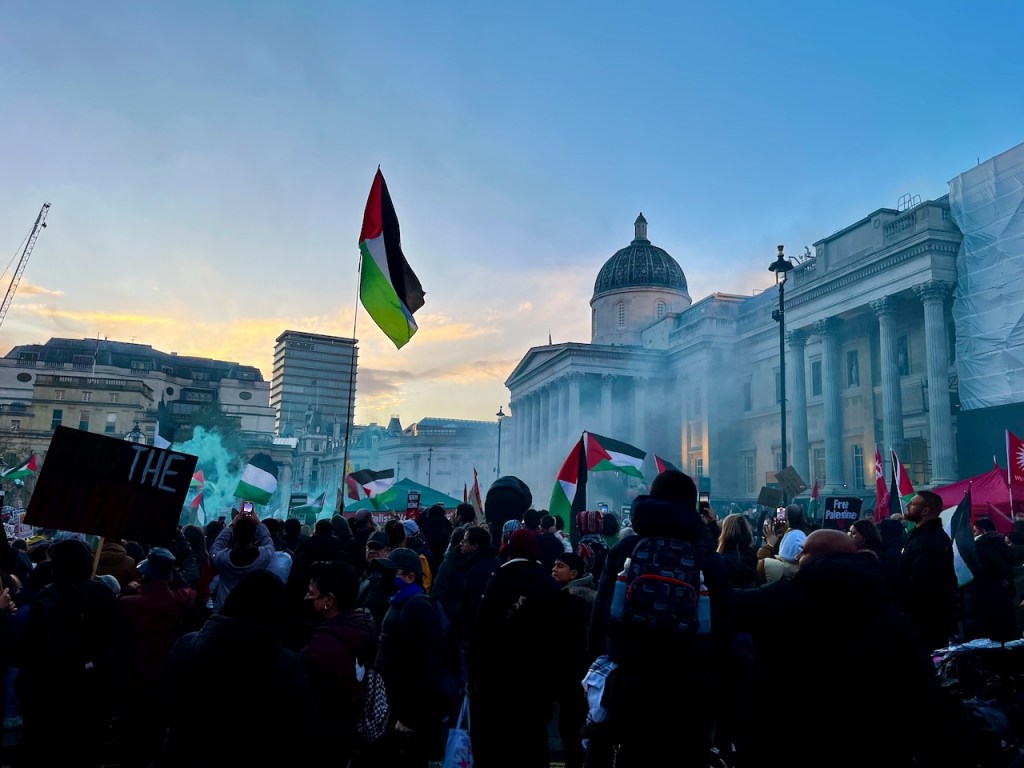
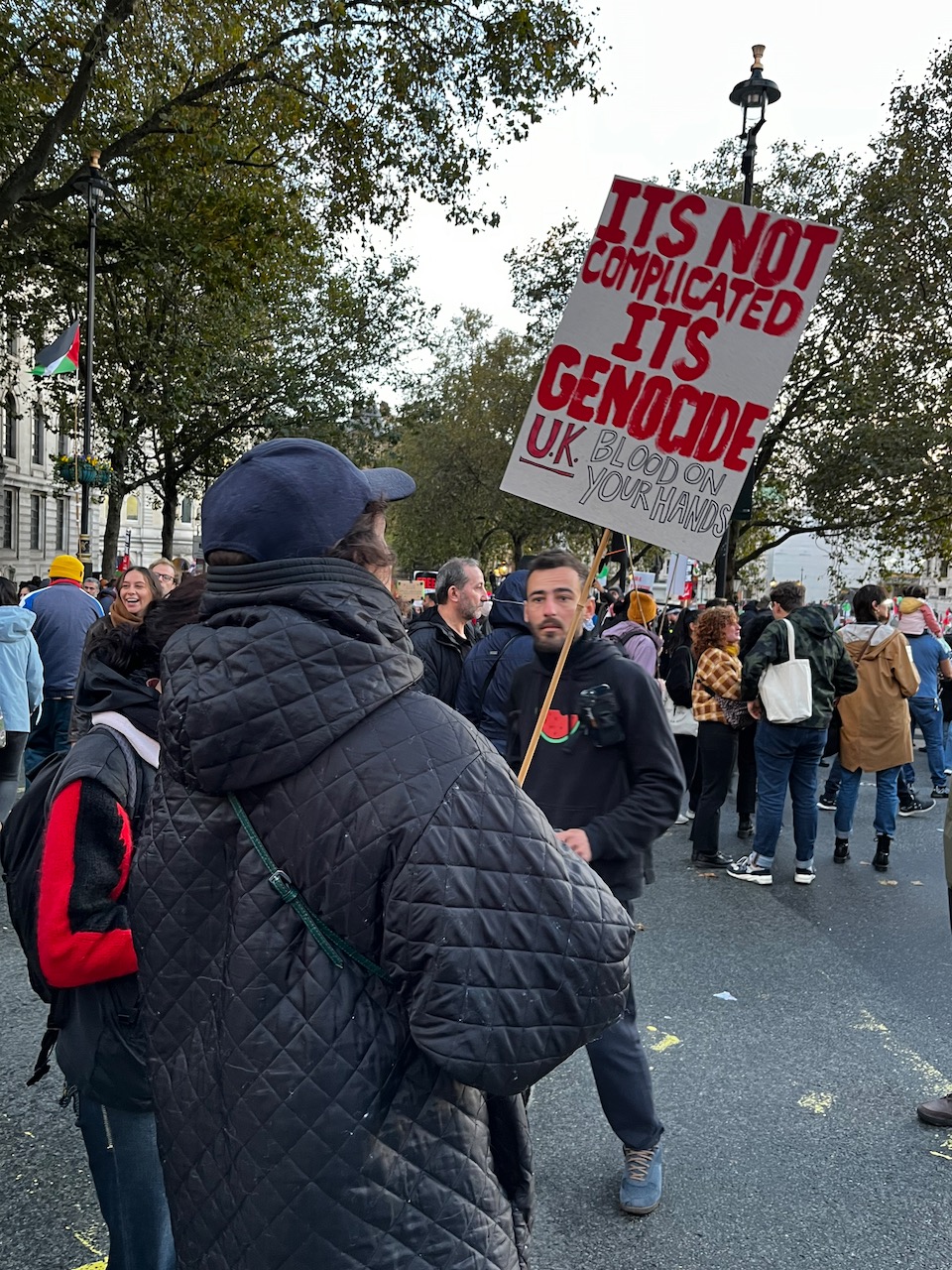
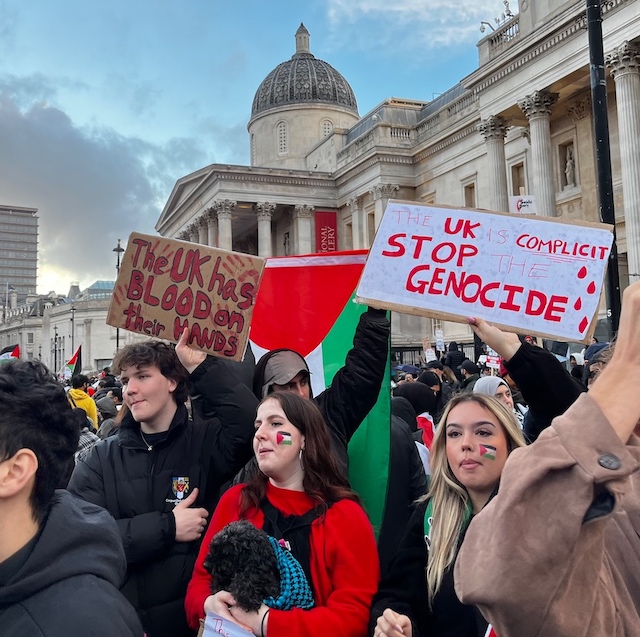
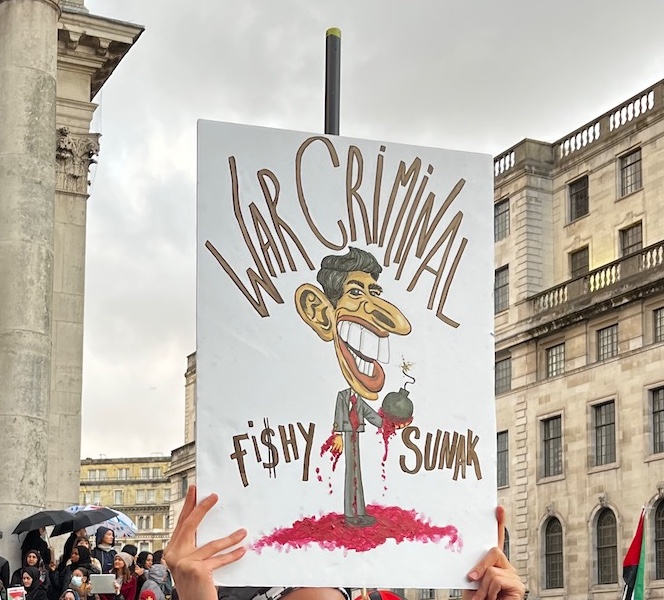
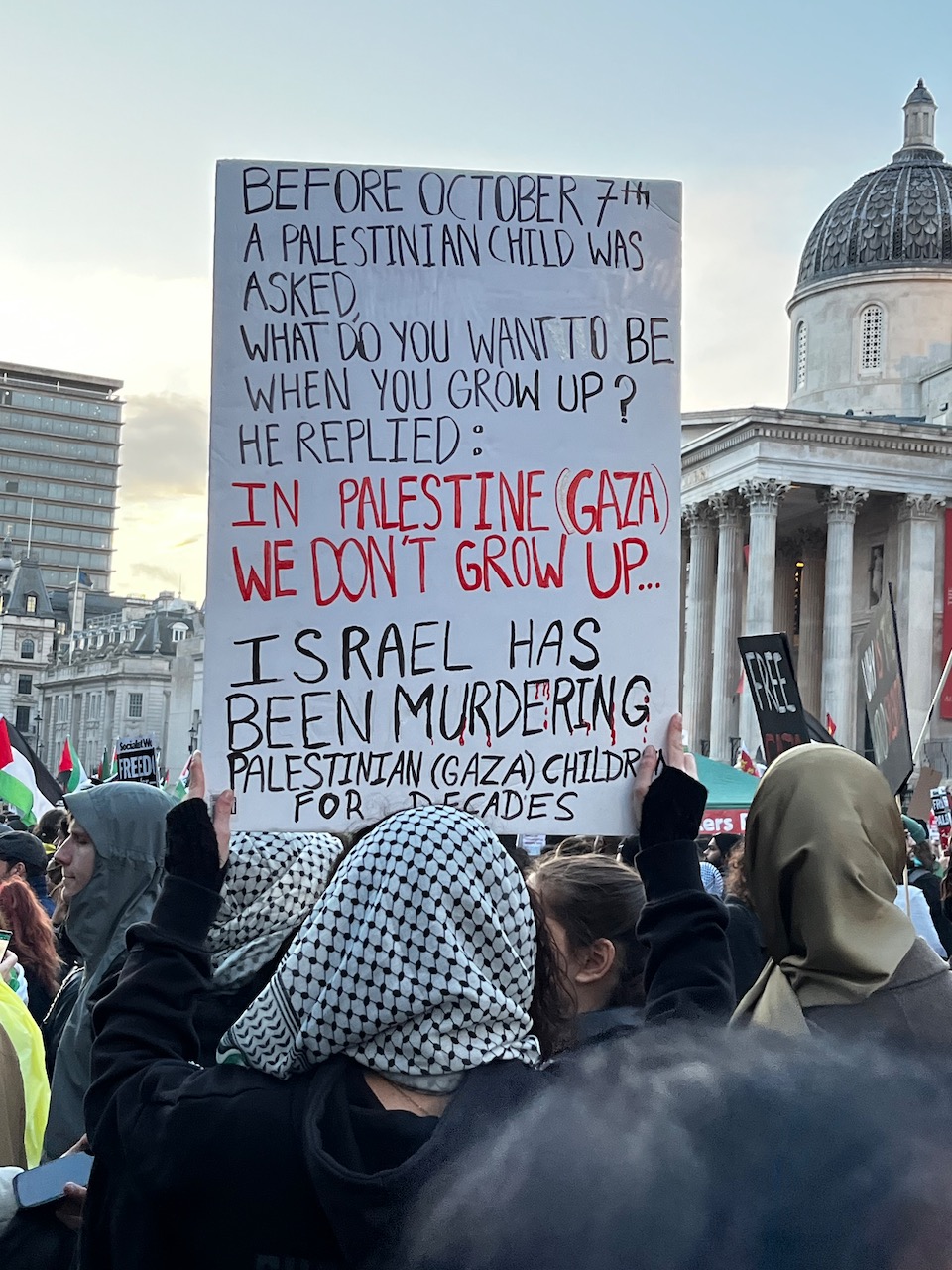
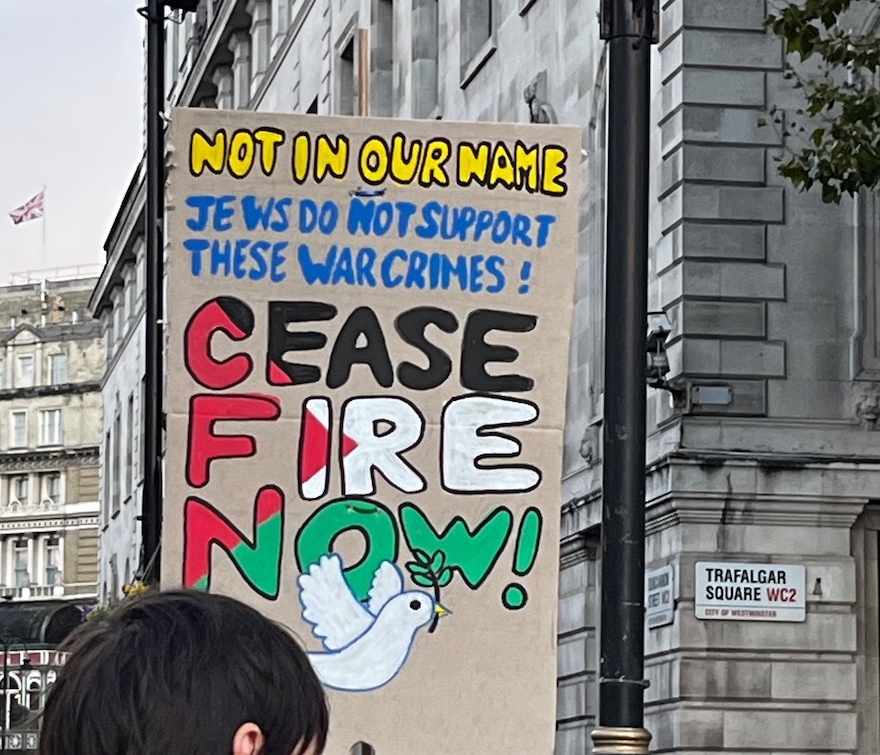
It was Iqbal’s birth anniversary recently, and Purana Pakistan on Instagram had shared a poem he wrote in 1938; Shaam-o-Falasteen – Syria and Palestine. It prompted me to locate and share the political views of the political leadership at the time in British India. The views of both the Indian National Congress and the All-India Muslim League were immensely sympathetic and supportive of the Palestinian people and their rights. It was framed in wider British imperialism, and for Nehru, “the Arab struggle against British imperialism in Palestine is as much part of the great world conflict as India’s struggle for freedom” (1936). Below I share a selection of views from Nehru, Jinnah, Gandhi and Iqbal.
NEHRU, 1936
Press statement issued by Jawaharlal Nehru, 13 June 13, 1936
Few people, I imagine, can withhold their deep sympathy from the Jews for the long centuries of the most terrible oppression to which they have been subjected all over Europe. Fewer still can repress their indignation at the barbarities and racial suppression of the Jews which the Nazis have indulged in during the last few years, and which continue today. Even outside Germany, Jew-baiting has become a favourite pastime of various fascist groups.
This revival in an intense form of racial intolerance and race war is utterly repugnant to me and I have been deeply distressed at the sufferings of vast numbers of people of the Jewish race. Many of these unfortunate exiles, with no country or home to call their own, are known to me, and some I consider it an honour to call my friends. I approach this question therefore with every sympathy for the Jews. So far as I am concerned, the racial or the religious issue does not affect my opinion.
But my reading of war-time and post-war history shows that there was a gross betrayal of the Arabs by British imperialism. The many promises that were made to them by Colonel Lawrence and others, on behalf of the British Government, and which resulted in the Arabs helping the British and Allied Powers during the war, were consistently ignored after the war was over. All the Arabs, in Syria, Iraq, Trans-Jordan and Palestine, smarted under this betrayal, but the position of the Arabs in Palestine was undoubtedly the worst of all.
Having been promised freedom and independence repeatedly from 1915 onwards, suddenly they found themselves converted into a mandatory territory with a new burden added on— the promise of the creation of a national home for the Jews — a burden which almost made it impossible for them to realise independence.
The Jews have a right to look to Jerusalem and their Holy Land and to have free access to them. But the position after the Balfour declaration was very different. A new state within a state was sought to be created in Palestine, an ever-growing state with the backing of British imperialism behind it, and the hope was held out that this new Jewish state would, in the near future, become so powerful in numbers and in economic position that it would dominate the whole of Palestine.
Zionist policy aimed at this domination and worked for it, though, I believe, some sections of Jewish opinion were opposed to this aggressive attitude. Inevitably, the Zionists opposed the Arabs and looked for protection and support to the British Government. Such case as the Zionists had might be called a moral one, their ancient associations with their Holy Land and their present reverence for it. One may sympathise with it. But what of the Arabs? For them also it was a holy land — both for the Muslim and the Christian Arabs.
For thirteen hundred years or more they had lived there and all their national and racial interests had taken strong roots there. Palestine was not an empty land fit for colonisation by outsiders. It was a well-populated and full land with little room for large numbers of colonists from abroad. Is it any wonder that the Arabs objected to this intrusion? And their objection grew as they realised that the aim of British imperialism was to make the Arab-Jew problem a permanent obstacle to their independence. We in India have sufficient experience of similar obstacles being placed in the way of our freedom by British imperialism.
It is quite possible that a number of Jews might have found a welcome in Palestine and settled down there. But when the Zionists came with the avowed object of pushing out the Arabs from all places of importance and of dominating the country, they could hardly be welcomed. And the fact that they have brought much money from outside and started industries and schools and universities cannot diminish the opposition of the Arabs, who see with dismay the prospect of their becoming permanently a subject race, dominated, politically and economically, by the Zionists and the British Government.
The problem of Palestine is thus essentially a nationalist one— a people struggling for independence against imperialist control and exploitation. It is not a racial or religious one. Perhaps some of our Muslim fellow countrymen extend their sympathy to the Arabs because of the religious bond.
But the Arabs are wiser and they lay stress only on nationalism and independence, and it is well to remember that all Arabs, Christian as well as Muslim, stand together in this struggle against British imperialism. Indeed, some of the most prominent leaders of the Arabs in this national struggle have been Christians.
If the Jews had been wise, they would have thrown in their lot with the Arab struggle for independence. Instead, they have chosen to side with British imperialism and to seek its protection against the people of the country….
The Arabs of Palestine will no doubt gain their independence, but this is likely to be a part of the larger unity of Arab peoples for which the countries of western Asia have so long hankered after, and this again will be part of the new order which will emerge out of present-day chaos. The Jews, if they are wise, will accept the teaching of history, and make friends with the Arabs and throw their weight on the side of the independence of Palestine, and not seek a position of advantage and dominance with the help of the imperialist power.
Selected and edited by Mridula Mukherjee, former Professor of History at JNU and former Director of Nehru Memorial Museum and Library.
IQBAL, 1937 Iqbal writing in response to the Peel Commission’s recommendations, July 1937
We must not forget that Palestine does not belong to England. She is holding it under a mandate from the League of Nations, which Muslim Asia is now learning to regard as an Anglo-French institution invented for the purpose of dividing the territories of weaker Muslim peoples. Nor does Palestine belong to the Jews who abandoned it of their own free will long before its possession by the Arabs.
Mr. Jinnah in his presidential address to the AIML in 1937,
Great Britain has dishonored her proclamation to the Arabs – which had guaranteed to them complete independence of the Arab homelands…After having utilized them by giving them false promises, they installed themselves as the mandatory power with that infamous Balfour Declaration…fair-minded people will agree when I say that Great Britain will be digging its grave if she fails to honor her original proclamation…
You know the Arabs have been treated shamelessly—men who, fighting for the freedom of their country, have been described as gangsters, and subjected to all forms of repression. For defending their homelands, they are being put down at the point of the bayonet, and with the help of martial laws. But no nation, no people who are worth living as a nation, can achieve anything great without making great sacrifice such as the Arabs of Palestine are making.
Hitherto I have refrained practically from saying anything in public regarding the Jew-Arab controversy. I have done so for good reasons. That does not mean any want of interest in the question, but it does mean that I do not consider myself sufficiently equipped with knowledge for the purpose. For the same reason I have tried to evade many world events. Without airing my views on them, I have enough irons in the fire. But four lines of a newspaper column have done the trick and evoked a letter from a friend who has sent me a cutting which I would have missed but for the friend drawing my attention to it. It is true that I did say some such thing in the course of a long conversation with Mr. Louis Fischer on the subject. I do believe that the Jews have been cruelly wronged by the world. “Ghetto” is, so far as I am aware, the name given to Jewish locations in many parts of Europe. But for their heartless persecution, probably no question of return to Palestine would ever have arisen. The world should have been their home, if only for the sake of their distinguished contribution to it.
But, in my opinion, they have erred grievously in seeking to impose themselves on Palestine with the aid of America and Britain and now with the aid of naked terrorism. Their citizenship of the world should have and would have made them honoured guests of any country. Their thrift, their varied talent, their great industry should have made them welcome anywhere. It is a blot on the Christian world that they have been singled out, owing to a wrong reading of the New Testament, for prejudice against them. “If an individual Jew does a wrong, the whole Jewish world is to blame for it.” If an individual Jew like Einstein makes a great discovery or another composes unsurpassable music, the merit goes to the authors and not to the community to which they belong.
No wonder that my sympathy goes out to the Jews in their unenviably sad plight. But one would have thought adversity would teach them lessons of peace. Why should they depend upon American money or British arms for forcing themselves on an unwelcome land? Why should they resort to terrorism to make good their forcible landing in Palestine? If they were to adopt the matchless weapon of non-violence whose use their best Prophets have taught and which Jesus the Jew who gladly wore the crown of thorns bequeathed to a groaning world, their case would be the world’s and I have no doubt that among the many things that the Jews have given to the world, this would be the best and the brightest. It is twice blessed. It will make them happy and rich in the true sense of the word and it will be a soothing balm to the aching world.
















 BAGICHA