In the days leading up to the Partition of British India, there was a lot of anxiety as to how the drawing of the Radcliffe Line would impact on the ground. This was much more pronounced amongst the Sikh community, whose spiritual homeland would now be divided to make the Partition Plan and its two state solution possible.
Below are two newspaper clips from Select newspaper coverage of the Partition of India (1947), which has been compiled from The Hindu, The Hindustan Times and The Statesman, by Dr. Kirpal Singh, Khalsa College, Amritsar.
AKALI LEADERS CALL TO SIKHS.
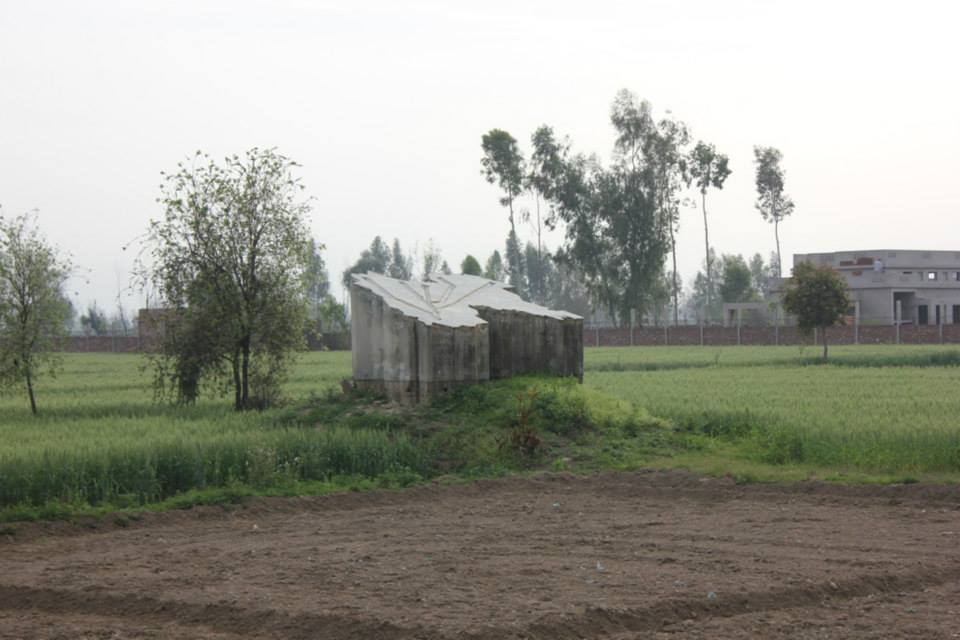
NEW DELHI, August 2: Giani Kartar Singh, President, Shiromani Akali Dal in a statement today calls upon Sikhs to observe August 5 as “Nankana Sahib Day.”
He says: Though the ban at Nankana Sahib has been successfully defied and restrictions on holding of our conference withdrawn, the Sikhs have proved once again their determination not to surrender the sacred territory of Nankana Sahib at any cost to the “Pakistanists”.
I call upon all Sikhs to observe August 5 as “Nanakana Sahib Day” hold meetings and send telegrams to the Chairman of the Boundary Commission that unless 85% of our population and colony areas are kept in the East Punjab and due regard is paid to our holy shrines while demarcating its boundaries so as [to] bring in the largest number of these in “Hindustan” we shall not rest content.”
SIKH CAMPAIGN IN BRITAIN:
LONDON, Aug.2. Two hundred Indians, most of them Sikhs in colourful turbans attended a public meeting last night to hear to Sikh Delegates who have come to London to present a Sikh Demand in connection with the division of the Punjab.
Sardar Ganga Singh, Leader of the Delegation, said that he had come to London representing one of the most influential Sikh organisations in the Punjab the Shiromani Akali Dal, to present the demands of the Sikhs regarding the Punjab division.
The river Chenab should be the Boundary Line of the two Punjabs, he said, anything contrary to this would be against the interest of the Sikhs and he hoped that the British Chairman of the Boundary Commission would be fair and impartial. The Sikhs had made contributions during the last war for freedom and democracy and it would be the greatest tragedy if they were deprived of their legitimate demands in their own homeland. Besides, no power on earth can dominate this gallant community.
If the Sikhs were deprived of their legitimate demands, the Punjab would be the land of eternal troubles Mr. Ganga Singh continued.
Dr. Kumria, the Chairman of the meeting, said he was opposed to the division of India, but it seemed that under the circumstances, the leaders of the Indian National Congress were justified in accepting the Mountbatten plan.
“Since we accept the division of India we would like to see that there are fair division of the provinces of the Punjab and Bengal.”
The Chairman emphasised that this division was bound to be temporary and would vanish within a short time.” Reuter.


 BAGICHA