In December 2004, I was traveling from Islamabad to Lahore on the M-2 motorway, which is the first motorway to be created in South Asia and which was inaugurated in 1997. It is also one of the most expensive to be constructed under the Korean company, Daewoo. The journey of 184 km takes one via the magnificent Salt Range and Kallar Kahar, a subdivision of Chakwal District (Punjab) and conveniently located close to the M-2.
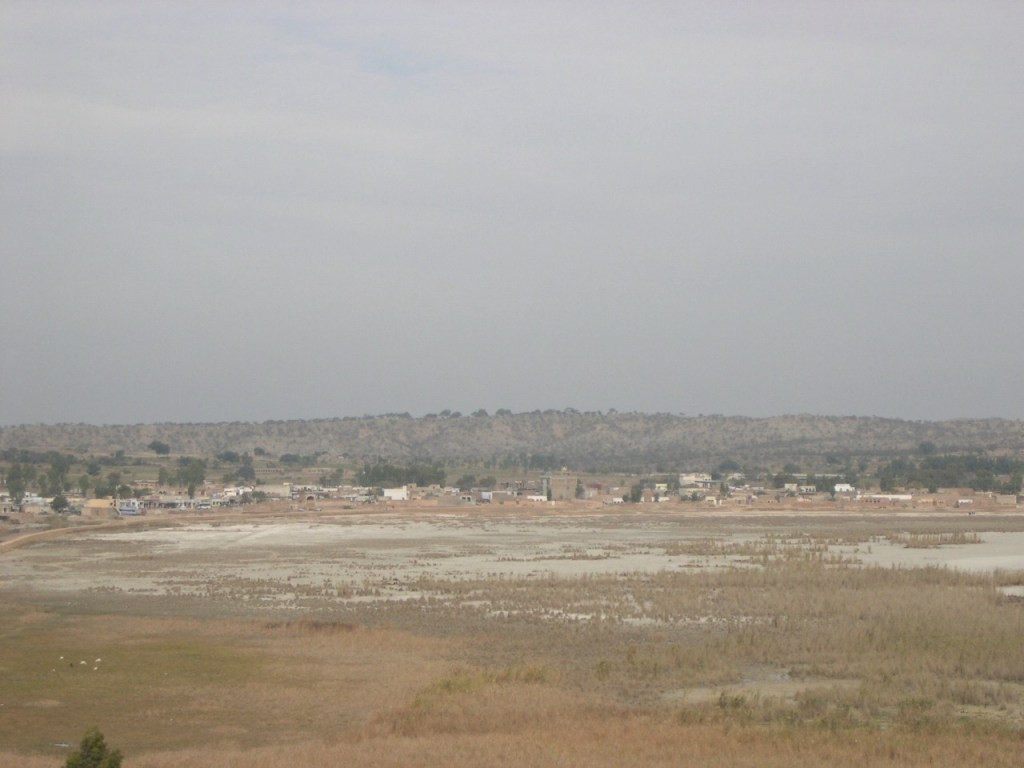
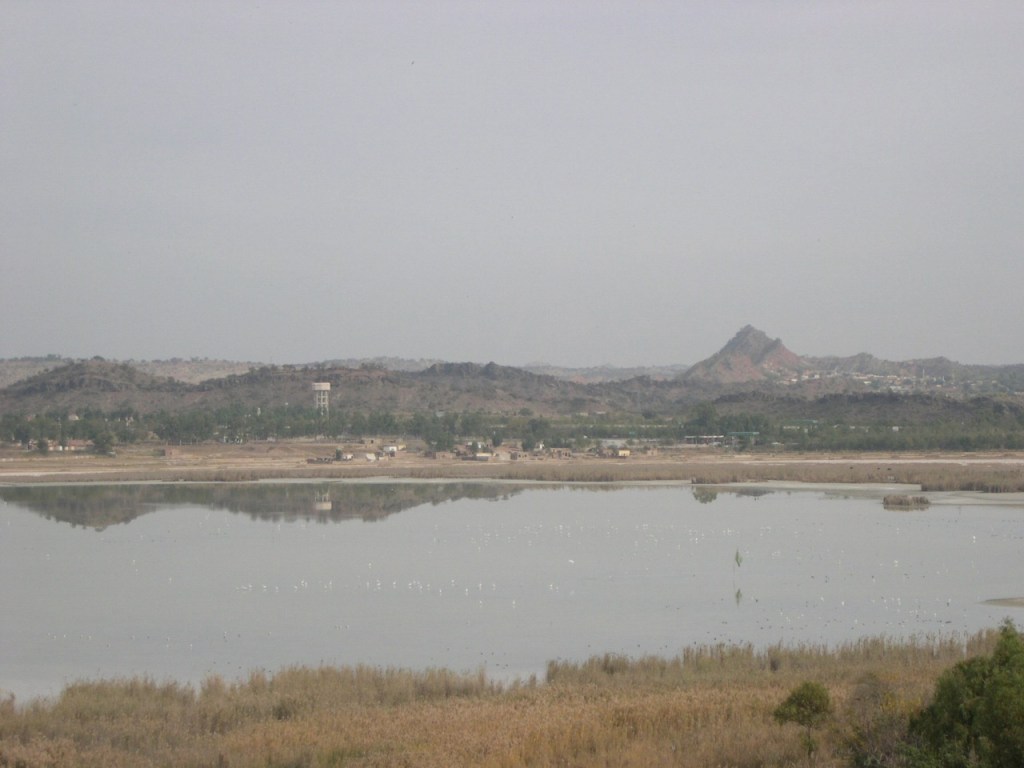
Kallar Kahar is also a popular tourist destination with captivating lakes and the Katas Raj Temple complex, dedicated to Lord Shiva, dating back to 615-950 CE. The founder of the Great Mughal dynasty, Zahir ud-Din Muhammad Babur (1483-1530), stopped here with his army, while en route to north India in 1519. During this stay, a throne was built by cutting a piece of limestone formation to create a raised platform, from where he addressed his army. This throne, known as Takht-e-Babri, was located within the Bagh-i-Safa, the first of many Mughal gardens to be created. Salman Rashid in his book, The Salt Range and the Potohar Plateau (Sang-e-Meel, 2001), mentions how Babar, described the area of Kallar Kahar Lake as a “charming place with good air”.
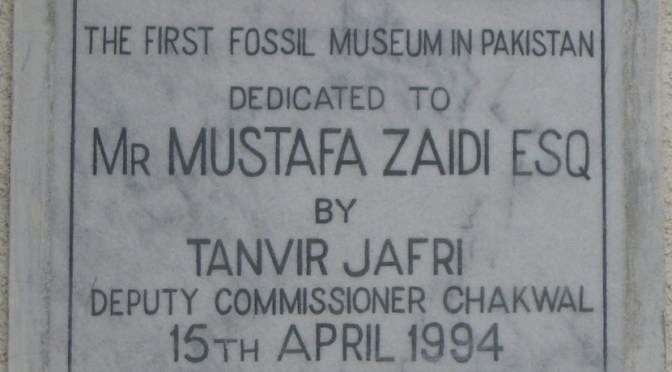
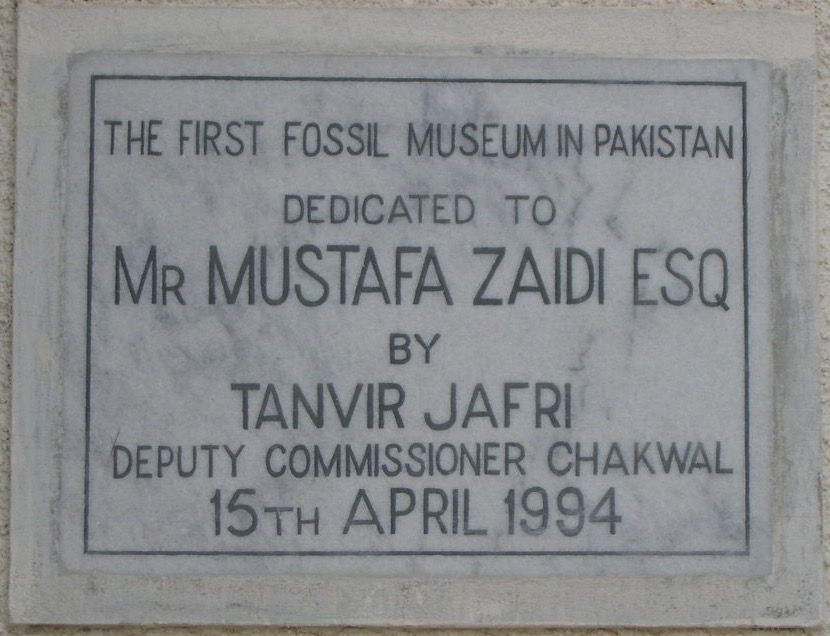
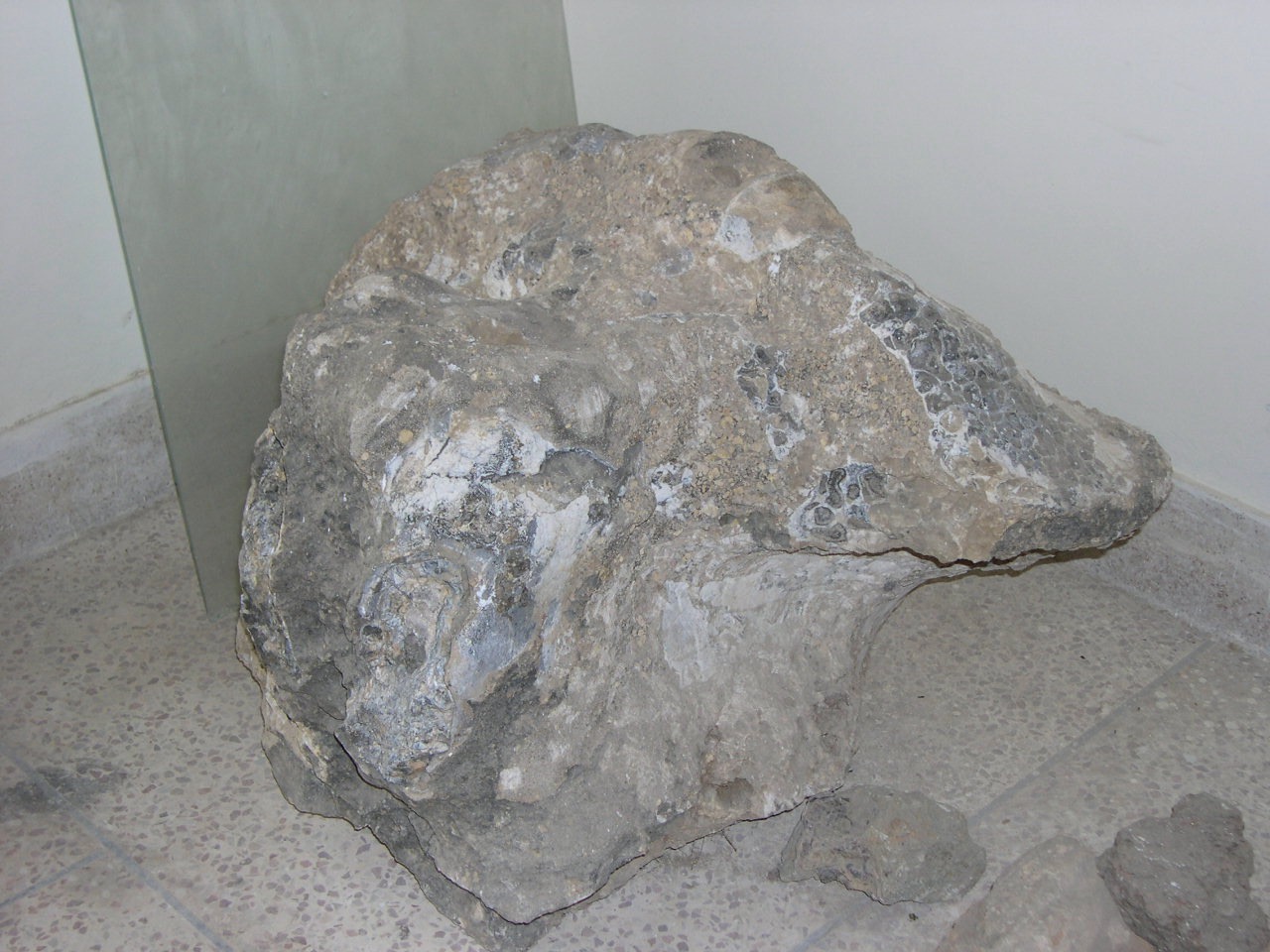
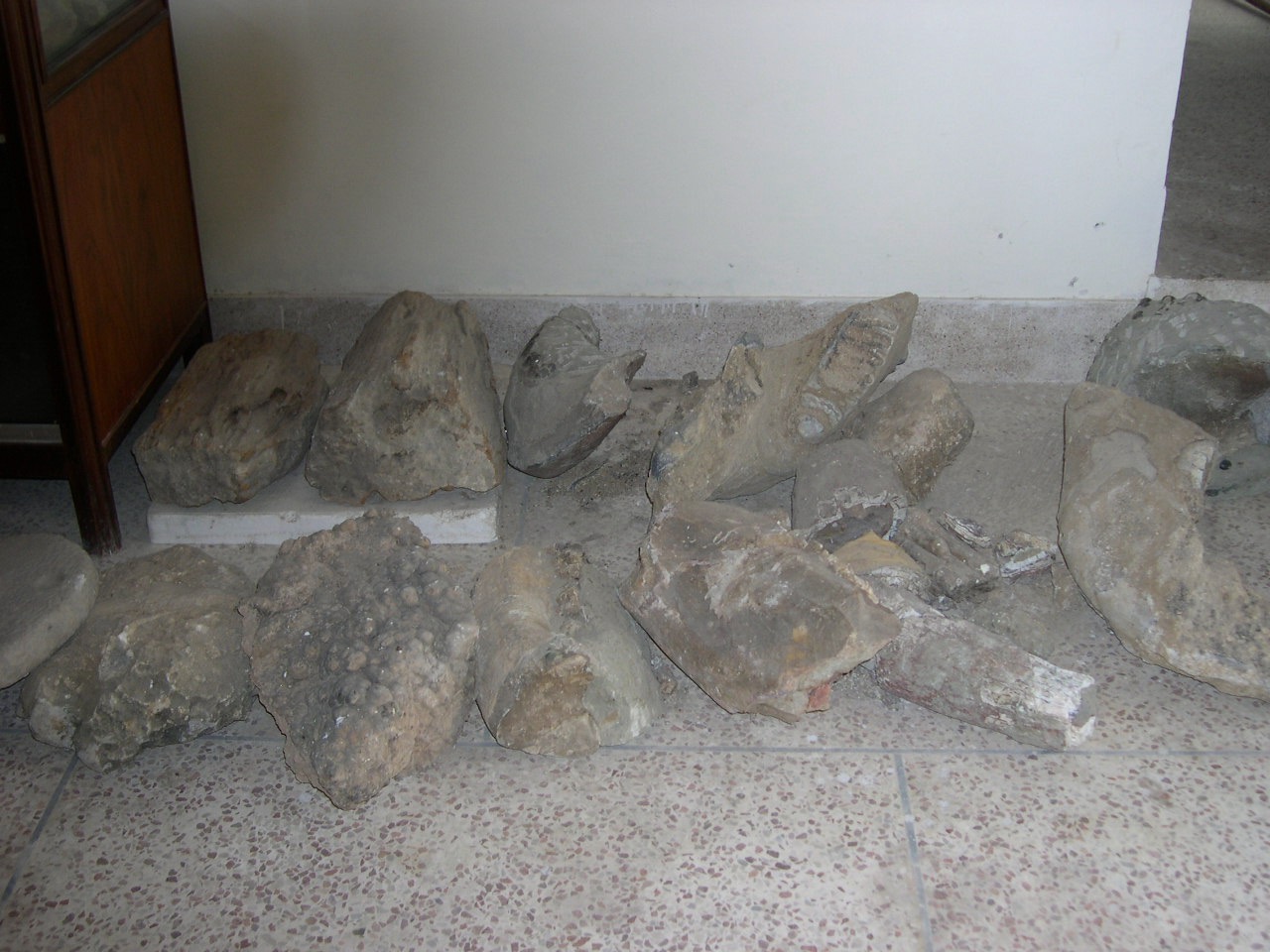
Back in 2004, I also stumbled upon the first fossil museum in Pakistan! Actually, it was less a museum and more a room with a variety of fossils scattered randomly on the floor. Neglected and dusty, they appeared to be of little significance. I recently came across this old photograph, which I had forgotten about.
I was so intrigued by the plaque with this inscription of the first fossil museum that I started doing a little digging about it, with little to show. A search for Mustafa Zaidi throws up a famous poet/civil servant (born 16 October 1930 in Allahabad and died 12 October 1970), while Tanvir Jafri, the then-DC of Chakwal, might still be around with recollections of this fossil museum.
I think the fossil museum is perhaps part of the Kallar Kahar Museum now, which is located opposite the Lake. It was finally inaugurated earlier this year in April, after seven years of its completion. At the time, I remember the caretaker saying that they there was something bigger in the pipeline, to create a better museum space. In South Asia, these matters take time (years), unless there is political mileage in the project. Though I should not have been so dismissive of the fossils, because this region is rich in history and has dinosaur fossils dating back 15 million years. But heritage remains a low priority for the country, whether prehistoric, ancient or modern, and is a simultaneously contested and marginalised space.
It was fifty years ago that Henry Kissinger made a secret trip to Beijing in July 1971. Kissinger, who was President Nixon’s National Security Advisor, flew to Beijing from Pakistan on PIA flight. His meetings there produced an agreement that President Nixon would visit China, which saw the beginning of the U.S.-China effort to discuss the issues that had divided them over the years. Below are some snippets of recent articles that have appeared to mark this moment from Pakistan’s perspective and also some archival material.
FIFTY years ago today, on July 8, 1971, Dr Henry Kissinger as president Nixon’s envoy made a stopover in Rawalpindi to meet president Yahya Khan. Kissinger came from New Delhi, leaving a perplexed prime minister Mrs Indira Gandhi wondering why he had dropped in for such insubstantial talks.
In Rawalpindi that night, Dr Kissinger had dinner with the president, during which they discussed the secret they had shared for two years — the furtive contact between US president Nixon and the Chinese leadership of Chairman Mao Zedong and premier Zhou Enlai.
Dr Kissinger expressed his apprehension over his visit to Beijing, insisting at one stage that president Yahya should accompany him as a guarantor of his safety. Yahya demurred and offered Kissinger a tin hat and a general instead.
In the early hours of July 9, while his ‘double’ (ostensibly with a gastric upset) drove to Nathiagali, Dr Kissinger flew out of Chaklala airport in a PIA aircraft. He spent the next few days in Beijing and returned on July 11.
I dined with former president Yahya Khan four years later, on Aug 2, 1975. He was then in ‘protective custody’ in his Harley Street home. I asked him about Chairman Mao: “Like an ocean”. Zhou Enlai? “Courteous, far-sighted but like a mouse in front of Chairman Mao.” And president Richard Nixon? “A true friend of Pakistan.”
Yahya Khan — the go-between trusted by both the Americans and the Chinese — maintained a confidential record consisting of 49 documents, kept in a loose-leaf folder which his son Ali Yahya hid under his bed. Occasionally, tantalisingly, he would reveal some but not all its contents.
Years later, Ali gave me a full set of the papers. These I was able to convert into a book — From a Head, Through a Head, To a Head: The Secret Channel between the US and China through Pakistan (2000). Later, I discovered a cache of Nixon’s presidential papers stored in the US National Archives, in Washington, D.C. They proved uniquely valuable, because Kissinger had put an embargo on his own papers. Read the full article.
On this particular night in July 1971, we were told to to get ready for a 3 AM departure. Pakistan International Airlines was routinely used for VVIP (Very Very Important Person) travel from its very inception and in the 1960s had developed a security check-list to cover such operations whenever needed. The basics involved securing the aircraft with armed guards during preflight maintenance and ensuring flight operation by a crew that had prior national security clearance.
Being one of the Chief Pursers at the time who had such security clearance, I was asked in July 1971, to proceed to Rawalpindi from Lahore where I was on Vacation. A Boeing 707 crew under the command of Captain M T Baig was assembled in Intercontinental Hotel Rawalpindi without a clue as to the nature of this VVIP operation. We were only told in clear terms that we were not to communicate with anyone and that we would be told to operate a VVIP flight on short notice…
Since it was dark, it was difficult to see the passengers in his car. But as soon as they came out of the car and started to come up the steps, lo and behold! the man following Mr. Khan was none other than Dr. Henry Kissinger, Assistant to the US President for National Security affairs!
I was the first to greet him aboard, introduced myself as Purser in charge. Dr Kissinger then introduced me to the other gentlemen in the party – namely Winston Lord, John Holdridge and Richard Smyser. Mr. Khan got out, the door was closed and departure announced to Peking. I remember having told Captain M.T. Baig, the commander of this flight, as to who exactly our VVIP passengers were. He was as surprised as one might expect. Read the full account.
Another important channel to Beijing was Ambassador Huang Hua, who headed the PRC’s United Nations Mission when it was established in November 1971, a few weeks after the U.N. General Assembly voted to seat Mainland China. Huang and Kissinger began holding secret meetings at a CIA safehouse in the Lower East Side of Manhattan and quickly developed a comfortable relationship across the ideological divide. Although they were able to keep their meetings secret, within months some neighbors began to wonder “what is going on.” Security officials asked that Kissinger “arrive in something other than a large limousine,” arrive on time, and bring a less obtrusive Secret Service detail. (Apparently the agents had “been leaping out of the car and stopping traffic.”)
On 10 December 1971, Kissinger met with Huang Hua to brief him on the U.S. stance toward the South Asian crisis. A week earlier, the Bangladesh crisis had exploded into war when Pakistan launched a surprise attack on India. With the U.S. public generally supporting India and the cause of Bangladeshi independence, Nixon and Kissinger secretly and deceptively tilted policy toward Pakistan, in part because of President Yahya Khan’s important role in facilitating communications with Beijing during 1970 and 1971. Moreover, Nixon and Kissinger saw India as a Soviet proxy and believed incorrectly that Indian prime minister Indira Gandhi aimed to destroy West Pakistan in order to humiliate the government that had helped to forge U.S.-China relations. Kissinger told Huang how the White House was sustaining its tilt toward Karachi with veiled threats to the Soviets, secret requests to Middle Eastern governments to provide military equipment to Karachi, and instructions to send an aircraft carrier fleet through the Straits of Malacca into the Bay of Bengal.
Secretary of State Rogers was furious with White House policy toward Pakistan, although he failed to realize that Nixon was as much its architect as Kissinger. Nixon and Kissinger continued to make key decisions in secret. Only they knew that their naval deployments were to ensure “maximum intimidation” of India and the Soviet Union. Although the Indians were puzzled by U.S. maneuvers, Kissinger later argued that this action had been “the first decision to risk war in the triangular Soviet-Chinese-American relationship.” However, he did not admit in his memoirs that he had counseled Ambassador Huang that if Beijing decided to intervene in the war “to protect its security, the U.S. would oppose efforts of others to interfere with the People’s Republic.” Huang’s rhetoric in the conversation was militant; Kissinger concluded incorrectly that the Chinese were about to join the fighting. Beijing had as little interest in intervening as the Indians had in escalating the fighting. A week after this meeting, on 17 December, the Indians accepted Pakistan’s offer of an unconditional cease-fire.
Getting To Beijing: Henry Kissinger’s Secret 1971 Trip A documentary history of US efforts under Richard Nixon to open discussions with Chinese leaders, an effort that yielded Kissinger’s trip forty years ago this month. Photo: Premier Zhou Enlai and National Security Advisor Henry Kissinger.






 BAGICHA