Read this fascinating article by Jasvinder Kaur in The Tribune on the history of knitting in Punjab.
It is hard to believe that knitting, a favourite pastime of women in the subcontinent during winter, came to India only during the British Raj. Christian missionaries helped in spreading this skill as girls were taught knitting in schools. Gradually, it became popular among women and replaced spinning as more people starting wearing hand-knitted sweaters and socks.
In the 19th century, people in Punjab were not in the habit of wearing sweaters, even when it was really cold in the winter. The wealthy preferred Pashmina shawls and the poor used woollen lois — for wrapping around oneself, as well as for bedding. Baden Powell (in 1872) writes, ‘It is a remarkable fact that in the plains during the cold weather natives do not like woollen goods, it is only the poorer class that resorts to kambal or blanket. Everyone who could afford it, much prefers wearing several thicknesses of cotton cloth and coats padded with cotton wool are universally worn.’
Sir George Watt and Percy Brown also expressed similar thoughts in 1904 that, in general, cotton, rather than wool, was preferred throughout India. This has also been corroborated by other writers and gazetteers of the period. Hand-spun khaddar was thicker and warmer than mill-made cotton and women used it to stitch their suits. Men often used a khes as a wrap instead of a warm chaddar. This practice was common in Punjab even in the 1990s and might still be prevalent at certain places by the older generation.
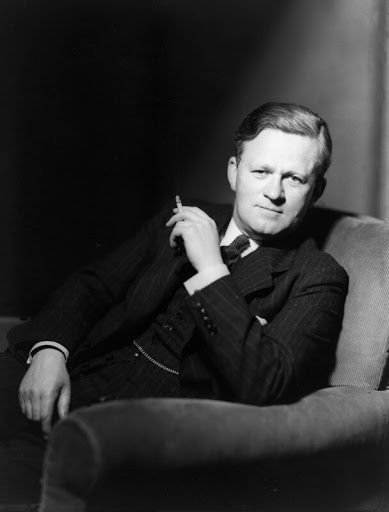
Hector Bolitho’s Jinnah: Creator of Pakistan is how it ended, in 1954; below is how it started, in 1951-2:
Hotel Metropole (Karachi), 4 February 1952, Bolitho to S.M. Ikram (Ministry of Information & Broadcasting, Government of Pakistan)
‘I have just returned from a conversation with Miss Jinnah [who had ‘issued a statement that she neither knew about, nor had anything to do with, Bolitho’s assignment’] and I feel that time has come for us to review the circumstances in which I have attempted to write the official biography of Quaid-i-Azam.
I have now been in Pakistan for almost one month [government had to issue a press note explaining the decision to engage ‘a foreigner’, in response to ‘a section of Pakistan Press’ raising a controversy], and I feel that, in the present circumstances, it would be dishonest and impossible for me to write a biography that would be worthy of the subject or acceptable to any reputable firm of publishers.
Since I have been engaged on my task, which began on October 22nd [the cabinet of Liaquat Ali Khan had approved minister I.H. Qureshi’s proposal to commission Bolitho on June 20, 1951], I have been refused all help from those officials who knew Quaid-i-Azam personally. K.H. Khurshid, his secretary, now in London, has expressed his regrets that he will not help. M.H. Saiyid, sent to me by you, has also refused to co-operate.
[Khurshid would later publish his Memories of Jinnah (1990, 2001). Saiyid would also publish A Political Study of Jinnah (1953, 1962), titled The Sound of Fury (1981)]
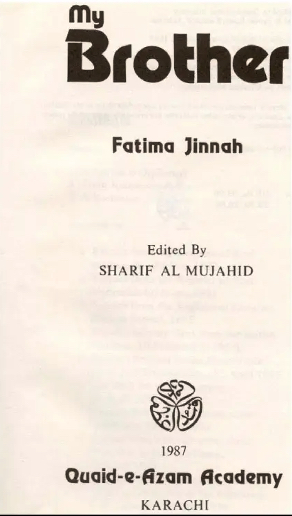
Mazhar Ahmad, A.D.C. to the Quaid, whom you promised as my helper, has not been made available. Prof. Mahmud Brelvi [?], appointed to help me, has not appeared for six days. Although he has been scrupulous in his courtesy, your office has ignored my situation, and has offered no explanation of Prof. Brelvi’s withdrawal. Nor has anyone been deputed to take his place. Nor, in this past month, have I been given even one of the promised documents relating to the Quaid. Nor has Miss Jinnah been approached by the Government. I have taken legal advice, and I find that Miss Jinnah owns the copyright of all her brother’s documents. She has stated to me that these are being used for the biography on which she is now engaged [Ghazanfar Ali Khan (then Pakistan’s Ambassador in Iran) had given a statement ‘welcoming Miss Jinnah’s decision’, adding that ‘she “should have been the first person to be consulted by the Government”’. I.H. Qureshi had been ‘seeking the assistance of his colleagues acquainted with Miss Jinnah to approach her, but these efforts failed’. Her book My Brother (1955) came out in 1987.]
As an indication of the frustration and discouragement I have endured from your department, I would draw your attention to my letter of January 19th. There I mentioned the Aga Khan’s offer to help me. His collaboration would be almost as valuable as that of Miss Jinnah. Sixteen days have passed since I wrote this, without the courtesy of a reply from you.
All this suggests that the Government is apparently unable, or unwilling, to abide by our contract. I consider that I have been deceived in this matter of documents, and the promised help of “members of the family” of the Quaid. I am wondering, therefore, if it would not be best for us to terminate our contract, under terms which I shall made as reasonable as possible. I propose:
That the sum of [2000] guineas – the remainder of my fee – be immediately paid into the office of my solicitors in London (Messrs Shirley Woolmer & Co.) with instructions to them to hold the money until the contract between us is formally cancelled.
That, as compensation for the loss of income from the sales of the English-language book rights in England, America, and the Sub-continent, I be compensated to the extent of [5000] guineas.
According to my contract, I am entitled to hotel accommodation for myself and [researcher] Captain Peel for [4] months. As my house in London is let, I shall require hotel accommodation for myself, and I shall have to compensate Captain Peel, until June 2nd. I therefore propose that the Pakistan Government pay me the sum of GBP 80 per week (based on last week’s bill) from the date of my leaving Pakistan until the period of [4] months is up.
All sum to be free from any deductions of income tax or other dues, and paid in full in London.
That 1st-class sea passage, to be approved by me, for myself and Captain Peel, be provided, as soon as possible, to England.
I am anxious to conclude this matter as soon as possible, because it is desirable for both of us that the story should not become distorted in the world press. I have already been approached to make a statement to a New York newspaper, and to an Indian newspaper.
I have no wish to see the Government embarrassed, and I am sure that we could come to an arrangement. I ask only for speed. Although our agreement was made in London, and, therefore, any legal action would no doubt have to be taken there, I trust that we can close the matter amicably, thus avoiding publicity unpalatable.
[The agreement text spoke of ‘not less than 90, 000 words’ biography for ‘the fee’ of 1000 GBP ‘on the signing of this contract’, 1000 GBP ‘on delivery of the finished manuscript to the publisher’ and, 1000 GBP ‘on publication in England or America (whichever first) + 1st class return sea passages, rail fares, travelling facilities and hotel accommodation for a period of 4 months, a liaison officer and all ‘reasonable assistance and facilities for the purpose of obtaining information, examining documents and interviewing government officials and members of the family’]
A disgruntled Bolitho, before writing the above letter, gave an interview to the Sind Observer, without warning to the government, published on 29 January 1952, in which he ‘hinted at the possibility of his giving up the assignment and seeking compensation because he had put all his work aside to fulfil this request which came first from Liaquat Ali Khan’.
Source: File No. 3 (6) – PMS/52 (Government of Pakistan, Prime Minister’s Secretariat)
What happened in-between, recalled In Quest of Jinnah: Diary, Notes and Correspondence of Hector Bolitho, edited by Sharif al Mujahid, 2007.
Hector Bolitho of New Zealand (1897-1974); author of 59 (!) books & biographer of George VI, Victoria & Albert and Edward VIII). Further Bio details.
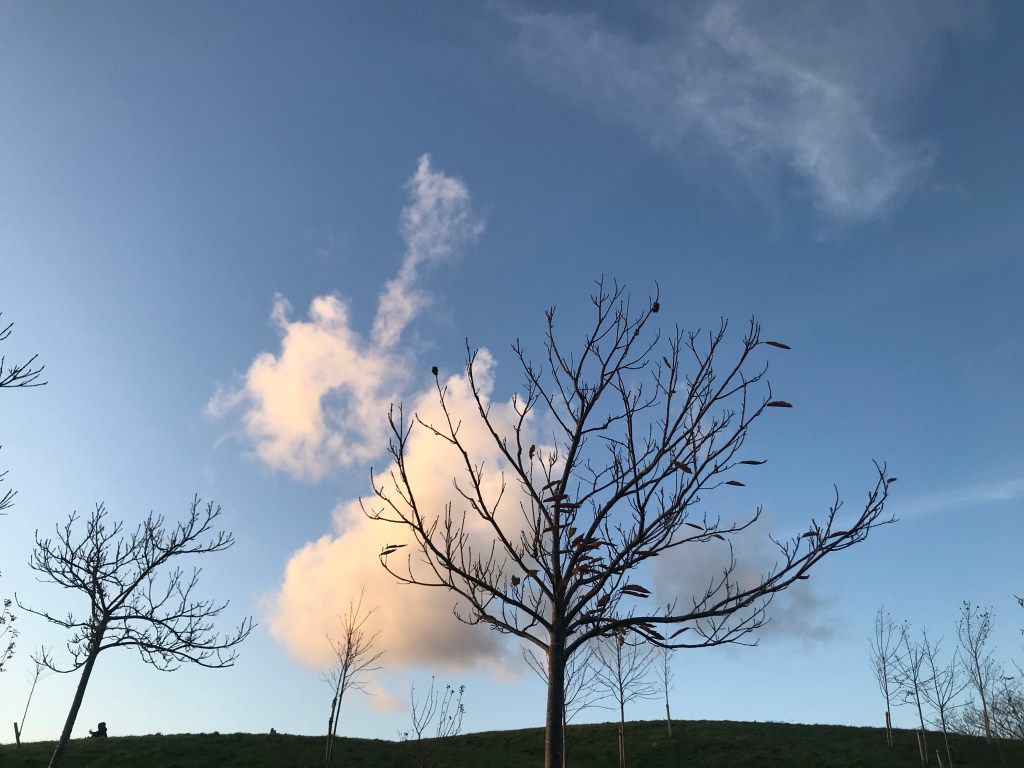
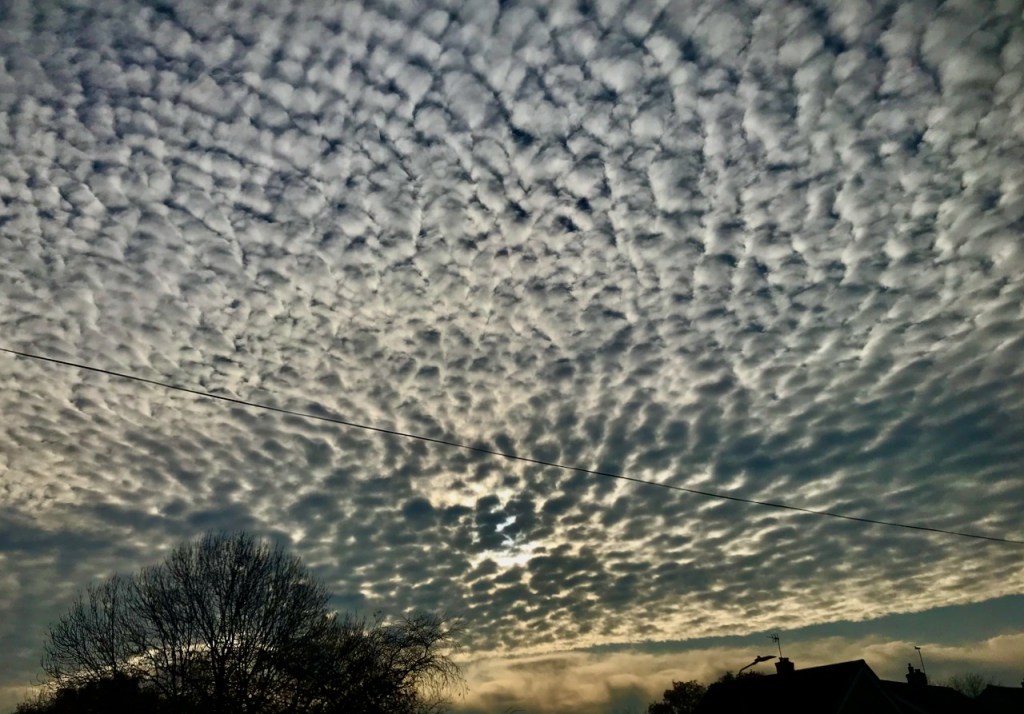
This post is inspired by the sky outside, which immediately reminded me of Manto’s Mottled Dawn. Saadat Hasan Manto, born in Samrala, Ludhiana, is considered one of the most iconic Urdu writers of the twentieth century. He lived in Bombay until 1948 and worked as a successful screenplay writer for the film industry, but even he finally relented and left India for Pakistan. Khalid Hasan writes, “Manto left Bombay, a city that he loved and a city that he yearned for until his dying day, soon after Partition. He felt deeply disturbed by the intolerance and distrust that he found sprouting like poison weed everywhere, even in the world of cinema. He could not accept the fact that suddenly some people saw him not as Saadat Hasan but as a Muslim.” Mottled Dawn: Fifty Sketches and Stories of Partition (Intro. Daniyal Mueenuddin and trans. Khalid Hasan, Penguin Modern classics), brings together stories of dark humour and horror, powerfully capturing the tragedy of Partition. The book begins with the opening lines of Faiz Ahmed Faiz’s Subh-e Azadi – Mottled Dawn.
Below is the full poem by Faiz, courtesy of Penguin.
Subh‐e AzadiYeh daagh daagh ujaalaa, yeh shab gazidaa seherWoh intezaar tha jiska, yeh woh seher to nahinYeh woh seher to nahin, jis ki aarzoo lekarChale the yaar ki mil jaayegi kahin na kahinFalak ke dasht mein taaron ki aakhri manzilKahin to hogaa shab-e-sust mauj ka saahilKahin to jaa ke rukegaa safinaa-e-gham-e-dilJawaan lahu ki pur-asraar shahraahon seChale jo yaar to daaman pe kitne haath padeDayaar-e-husn ki besabr kwaabgaahon sePukaarti rahi baahein, badan bulaate raheBahut aziz thi lekin rukh-e-seher ki laganBahut qareen tha haseenaa-e-noor ka daamanSubuk subuk thi tamanna, dabi dabi thi thakanSuna hai, ho bhi chukaa hai firaaq-e-zulmat-o-noorSuna hai, ho bhi chukaa hai wisaal-e-manzil-o-gaamBadal chukaa hai bahut ehl-e-dard ka dastoorNishaat-e-wasl halaal, o azaab-e-hijr haraamJigar ki aag, nazar ki umang, dil ki jalanKisi pe chaaraa-e-hijraan ka kuch asar hi nahinKahaan se aayi nigaar-e-sabaa, kidhar ko gayiAbhi charaag-e-sar-e-raah ko kuch khabar hi nahinAbhi garaani-e-shab mein kami nahin aayiNajaat-e-deedaa-o-dil ki ghadi nahin aayiChale chalo ki woh manzil abhi nahin aayi —Faiz Ahmed Faiz
The Dawn of Freedom, August 1947
This light, smeared and spotted, this night‐bitten dawn
This isn’t surely the dawn we waited for so eagerly
This isn’t surely the dawn with whose desire cradled in our hearts
We had set out, friends all, hoping
We should somewhere find the final destination
Of the stars in the forests of heaven
The slow‐rolling night must have a shore somewhere
The boat of the afflicted heart’s grieving will drop anchor somewhere
When, from the mysterious paths of youth’s hot blood
The young fellows moved out
Numerous were the hands that rose to clutch
the hems of their garments,
Open arms called, bodies entreated
From the impatient bedchambers of beauty—
But the yearning for the dawn’s face was too dear
The hem of the radiant beauty’s garment was very close
The load of desire wasn’t too heavy
Exhaustion lay somewhere on the margin
It’s said the darkness has been cleft from light already
It’s said the journeying feet have found union
with the destination
The protocols of those who held the pain in their
hearts have changed now
Joy of union—yes; agony of separation—forbidden!
The burning of the liver, the eyes’ eagerness, the heart’s grief
Remain unaffected by this cure for disunion’s pain;
From where did the beloved, the morning breeze come?
Where did it go?
The street‐lamp at the edge of the road has no notion yet
The weight of the night hasn’t lifted yet
The moment for the emancipation of the eyes
and the heart hasn’t come yet
Let’s go on, we haven’t reached the destination yet
—Translated by Baran Farooqui
Report of a joint inquiry into the causes and impact of the riots in Delhi from 31 October to 10 November 1984. Published jointly by Gobinda Mukhoty, President, PUDR, 213, Jor Bagh, New Delhi- 110003 AND Rajni Kothari, President, PUCL, 1, Court Road, Delhi – 110054. November 1984
Following the assassination of Prime Minister Indira Gandhi by her Sikh Bodyguards on 31 October 1984, parts of Delhi, North India and other areas with Sikh populations became engulfed in an anti-Sikh pogrom. From 31 October to 3 November 1984 in the national capital, organised violence against the Sikh community was unleashed, unlike anything it had witnessed previously since the anti-Muslim carnage of September 1947. The ‘official’ claim later was that 2,800 Sikhs were killed in Delhi and 3,350 elsewhere in the country. However, independent sources suggest a much high figure. Among these, one of the first to come out was this fact-finding report by political scientist Rajni Kothari of the People’s Union For Civil Liberties and Gobinda Mukhoty of the People’s Union for Democratic Rights, which investigated the murders, looting and rioting that took place during those 10 days and published it later the same month. It starkly concluded that:
…the attacks on members of the Sikh Community in Delhi and its suburbs during the period, far from being a spontaneous expression of “madness” and of popular “grief and anger” at Mrs. Gandhi’s assassination, as made out to be by the authorities, were the outcome of a well organised plan marked by acts of both deliberate commissions and omissions by important politicians of the Congress (I) at the top and by authorities in the administration. Although there was indeed popular shock, grief and anger, the violence that followed was the handiwork of a determined group which was inspired by different sentiments altogether.












 BAGICHA