
An out-of-the-box tea. We all know about tandoori chicken and tandoori roti. But… tandoori chai? That’s more or less what they’re serving at an …
City Food – Tandoori Chai, Zahra’s Restaurant & Café
An out-of-the-box tea. We all know about tandoori chicken and tandoori roti. But… tandoori chai? That’s more or less what they’re serving at an …
City Food – Tandoori Chai, Zahra’s Restaurant & Café
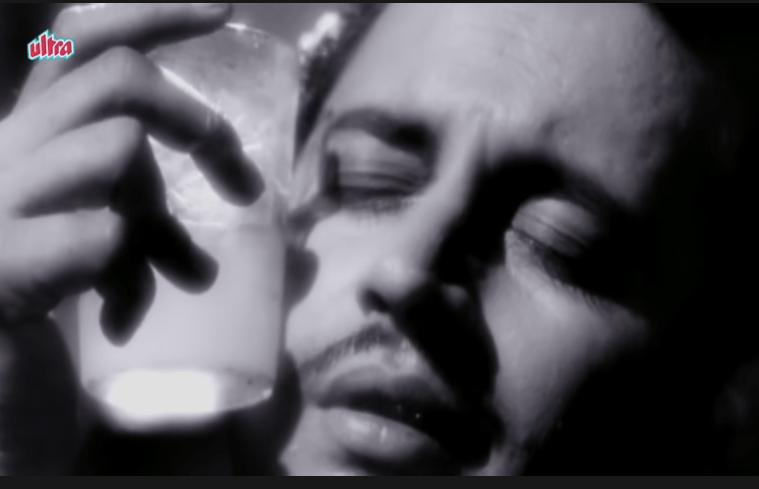
This song/poem written by Sahir Ludhianvi for the film Pyaasa, starring Guru Dutt, has as much relevance today as it did in 1957 at the height of the Nehruvian age. The lyrics and translation below are courtesy of Proud Indians, Are We? – Jinhe Naaz Hai Hind Par – Pyaasa By Deepa.
It is also worth reading the broader article, which is on Guru Dutt, “a man clearly ahead of his time.” Follow link for the song via YouTube. Make sure if you listen to any other versions that it has the last Antara of the song, which has been cut in some versions.
Ye kooche ye nilaam ghar dilkashi ke
Ye lutate huye caravan zindagi ke
Kahaan hain kahan hain muhafiz khudi ke
Jinhe naaz hai hind par wo kahaan hain
Kahaan hain kahaan hain kahaan hain
Look at these lanes, alluring houses which are up for sale/auction everyday. Look at these robbed caravans of life. Where are those protectors of self respect and pride? Where are those who say we are proud Indians? What are you exactly proud of?
Ye purpech galiyaan ye badnaam bazaar
Ye gumnaam raahi ye sikkon ki jhankaar
Ye ismat ke saude ye saudon pe taqraar
Jinhe naaz hai hind par wo kahaan hain
Kahaan hain kahaan hain kahaan hain
These complicated streets, these defamed, scandalized markets. The unknown pedestrians who walk in anytime with bagful of money. This trade of honour and chastity followed by the bargains of the same. Are we Indians proud for this? Where are those who say this?
Ye sadiyon se bekhauf sehmi si galiyaan
Ye masli huyi adhkhili zard kaliyaan
Ye bikti huyi khokhli rangraliyaan
Jinhe naaz hai hind par wo kahaan hain
Kahaan hain kahaan hain kahaan hain
These lanes which for years have been under pressure of fear, distress, angst. This place where the pale half blossomed buds are crushed (referring to young girls who fall prey to the flesh trade). The hollow festivities which are sold in this market. Show all this to those who say, they are proud of this country. Where are those people?
Wo ujle darichon mein paayal ki chhan chhan
Thaki haari saanson pe table ki dhandhan
Ye berooh kamron mein khaansi ki thanthan
Jinhe naaz hai hind par wo kahaan hain
Kahaan hain kahaan hain kahaan hain
The sound of the trinkets, anklets which come from the shimmering windows. Those tired, ill heartbeats which try to keep pace with the pace. This soul less room which filled with the unpleasant sound of coughing. For those who say they are proud Indians, please come and see this.
Ye phoolon ke gajre ye pikon ke chhinte
Ye bebaak nazrein ye gustaakh fiqrein
Ye dhalke badan aur ye bimar chehre
Jinhe naaz hai hind par wo kahaan hain
Kahaan hain kahaan hain kahaan hain
The flowers, the garlands, the stains of betel juice. The bold stares, the blunt, audacious comments. The deteriorating, decaying bodies and weak faces. Look at them, those who say, they are proud of their country.
Yahan piir bhi aa chuke hain jawaan bhi
Tanaumand bete bhi abba miyaan bhi
Ye biwi bhi hai aur behan bhi hai maa bhi
Jinhe naaz hai hind par wo kahaan hain
Kahaan hain kahaan hain kahaan hain
The ambassadors of religion, the young and the old, the sons and the fathers, all are regular visitors to this place. Here you will find someone’s wife, someone’s sister or mother too. Come and have a look at this place. Will this place make you proud?
Madad chaahti hai ye hawwa ki beti
Yashoda ki hamjins Radha ki beti
Payambar ki ummat Zulaykha ki beti
Jinhe naaz hai hind par wo kahaan hain
Kahaan hain kahaan hain kahaan hain
The girls, women here need help. They are no different from Eve, Yashoda, Radha, Zulaykha who are seen with regard and respect. Come and help them, they need you.
Zara mulk ke rahbaron ko bulaao
Ye kooche ye galiyaan ye manzar dikhaao
Jinhe naaz hai hind par unko laao
Jinhe naaz hai hind par wo kahaan hain
Kahaan hain kahaan hain kahaan hain
Someone please call the so called guides, leaders of the country. Show them these lanes, show them this miserable scene. Call them those who say they are proud of their country. Where are they?

A fragment of my personal history in celebration of International Women’s Day and in memory of my own mother, who played such an important part in shaping my ideas. Visit the Indian Memory Project to read the full piece which I wrote in 2013.
A reminder of the human cost of conflict…

The text on the plaque reads:
Reconciliation
In 1995, 50 years after the end of the Second World War this sculpture by Josefina de Vasconcellos has been given by Richard Branson as a token of reconciliation. An identical sculpture has been placed on behalf of the people of Coventry in the Peace Garden, Hiroshima, Japan.
Both sculptures remind us that, in the face of destructive forces, human dignity and love will triumph over disaster and bring nations together in respect and peace.
Josefina de Vasconcellos said that, “The sculpture was originally conceived in the aftermath of the War. Europe was in shock, people were stunned. I read in a newspaper about a woman who crossed Europe on foot to find her husband, and I was so moved that I made the sculpture. Then I thought that it wasn’t only about the reunion of two people but hopefully a reunion of nations which had been fighting.”
In 1995 (to mark the 50th anniversary of the end of World War II) bronze casts of the sculpture Reconciliation were placed in the ruins of Coventry Cathedral and in the Hiroshima Peace Park in Japan.
Read Josefina de Vasconcellos’ obituary in The Guardian.
 BAGICHA